Many custom options...


And formats...



From Here to Eternity in Chinese / Japanese...
Buy a From Here to Eternity calligraphy wall scroll here!
Personalize your custom “From Here to Eternity” project by clicking the button next to your favorite “From Here to Eternity” title below...
4. Eternity / Always and Forever
5. Eternal Life / Everlasting Life / Immortality
6. Love Forever / Love Eternal
7. Eternal Friendship / Friends Forever
8. Forever Love
9. Eternal Love / Love Eternally
10. Eternal Love
11. Eternal Life / Future Life
12. Infinity / Infinite / Endless / Boundless
14. Universe / Space
15. Eternal Friendship / Friends Forever
16. Forever Family
19. Eternal Love
From Here to Eternity
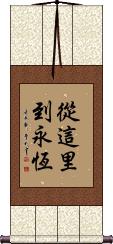
從這里到永恆 is the translation of the phrase “From here to eternity” into Mandarin Chinese.
Eternal / Eternity
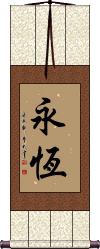
永恆 is the Chinese word for eternity.
The first character means always, forever, and perpetual. The second character holds the meaning of permanent. Together, they create a word that means eternal, eternally, or infinite time.
See Also: Immortality
Eternity / Forever
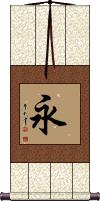
永 is the simplest form of eternity or “always and forever.”
永 can sometimes mean forever, always, perpetual, infinite, or “without end,” depending on context.
Note: Not often seen as a single Kanji in Japanese. Best if your audience is Chinese.
See Also: Forever | Ever Lasting
Eternity / Always and Forever
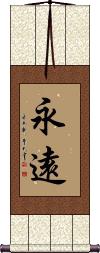
永遠 is the Chinese, Korean and Japanese word for forever.
If we take this word apart, the first character means always, forever, or perpetual. While the second character means far or distant.
See Also: Immortality
Eternal Life / Everlasting Life / Immortality
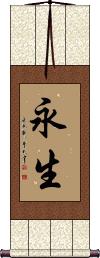
永生 are the last two words from John 3:16 in the Chinese Union Bible.
Although not specifically Christian, this is the way to express ever-lasting life or eternal life in Chinese.
In Japanese, this can either mean eternal life or immortality.
See Also: Eternity | Rebirth | Reincarnation | Immortality
Love Forever / Love Eternal
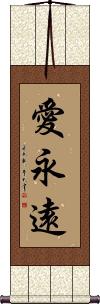
The first character here means “love.”
The last two mean forever, eternity, eternal, perpetuity, immortality, and/or permanence.
愛永遠 is the shortest and most universal way to express this idea in Chinese and Japanese.
Japanese note: This sound more like a title than a phrase in Japanese (if that makes any sense). 愛永遠 is a great title for a romantic book, the title of a movie, the name of a perfume, or even a name for a store.
See Also: Eternal Love | Forever Love
Eternal Friendship / Friends Forever
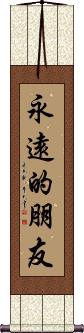
永遠的朋友 means friends that are eternal or a friendship that will last forever - you will remain the best of friends as long as you live.
The first two characters mean forever, eternal, eternity, perpetuity, immortality, and/or permanence.
The middle character links the words (it's a possessive article).
The last two characters represent friendship, or simply “friends.”
Forever Love
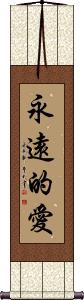
永遠的愛 refers to love that will last forever.
The first two characters mean forever, eternal, eternity, perpetuity, immortality, and/or permanence.
The third character is a possessive article which sort of makes this selection mean “The forever kind of love.”
The last character is “love.”
See Also: Eternal Love Always
Eternal Love / Love Eternally
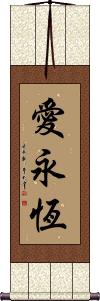
愛永恆 is the shortest way to express the idea of “love eternally” in Chinese.
The first character here means “love”
The last two mean eternal, eternally, everlasting, and/or perpetual.
See Also: Love Forever
Eternal Love
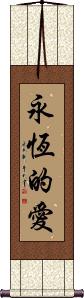
永恆的愛 is the best way to write “Eternal Love” in Chinese.
The first two characters mean eternal, eternally, everlasting, and/or perpetual.
The third character is a possessive article which sort of makes this selection mean “Love of the eternal kind.”
The last character is “love.”
This version is best if your audience is Chinese. We also have a Japanese version of eternal love.
See Also: Forever Love | Eternal Love (Japanese)
Eternal Life / Future Life
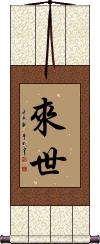
來世 is a word that can be used in many different ways.
It is often used to express the next life (life in heaven or wherever your soul is bound for). So it does have a religious overtone. However, it can also be used to express your life in the future - perhaps during your present lifetime.
It can also be translated as “the next world,” “the next generation,” “the time that is to come,” “otherworld,” or simply “posterity.”
See Also: Eternity | Rebirth | Reincarnation | Immortality
Infinity / Infinite / Endless / Boundless
(Chinese / Korean)
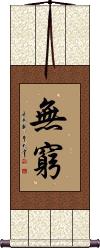
無窮 is the Chinese and Korean word meaning infinity, eternity, infinitude, infinite or endless.
無窮 literally translates as “without [ever becoming] exhausted/poor,” and in that context, can mean “inexhaustible” or “boundless” but this is usually read as “without end.” Some extended definitions include eternity, infinitude, or immortality.
In certain contexts, it can mean “immortality.”
The first character means “never” or “not.” The second means “exhausted,” “finished,” or “ending.”
Note: 無窮 is a Japanese word but rarely used in modern Japan.
Eternal / Long-Lasting
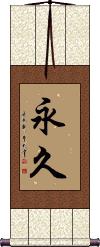
永久 is a Japanese, Chinese, and old Korean word that means everlasting, perpetual, lasting, forever, permanent, eternity, perpetuity, and/or immortality.
This can also be a female given name Haruku in Japan.
Universe / Space
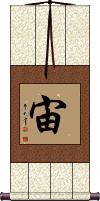
宙 means universe, cosmos, or outer space in Chinese, Japanese Kanji, and old Korean Hanja.
This can also mean air or midair depending on context.
In Korean, this can mean eternity in some contexts.
In Japanese, this can also be the female given name Haruka.
Eternal Friendship / Friends Forever
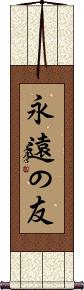
永遠の友 is a Japanese phrase about eternal friendship.
The first two characters mean eternal, eternity, perpetuity, forever, immortality, and permanence.
The third character is a possessive article which sort of makes this selection mean “Love, of the eternal kind.”
The last character is “friend” or “Friendship.”
See Also: Best Friends
Forever Family
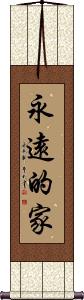
永遠的家 is a special phrase that we composed for a “family by adoption” or “adoptive family.”
It's the dream of every orphan and foster child to be formally adopted and find their “forever family.”
The first two characters mean forever, eternal, eternity, perpetuity, immortality, and/or permanence. The third character connects this idea with the last character which means “family” and/or “home.”
See Also: Family
Eternal Happiness
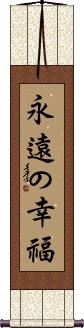
永遠の幸福 means “eternal happiness” in Japanese.
永遠 means eternal, eternity, perpetuity, forever, immortality, and permanence.
の is a possessive article which sort of makes this selection mean “happiness, of the eternal kind.”
幸福 means happiness, though this word can be translated as truly blessed, joy, happy, welfare, well-being, or fortunate.
Forever In My Heart
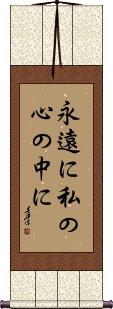
永遠に私の心の中に means “forever in my heart” or “always in my heart” in Japanese.
The character breakdown:
永遠 (eien) eternity; perpetuity; immortality; permanence.
に (ni) indicates the location of a person or thing.
私の (watashi no) my; mine.
心の中 (kokoro no naka) the middle of one's mind; the midst of one's heart.
に (ni) indicates the location of a person or thing (makes this “in” the middle of one's heart).
Note: There’s more than one way to say "Forever in My Heart" in Japanese, so you’ll find another version in our database. This is the very verbose version.
Note: Because this selection contains some special Japanese Hiragana characters, it should be written by a Japanese calligrapher.
Eternal Love
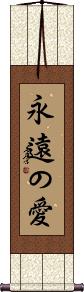
永遠の愛 is a great way to write “Eternal Love” in Japanese.
The first two characters mean eternal, eternity, perpetuity, forever, immortality, and permanence.
The third character is a possessive article which sort of makes this selection mean “Love, of the eternal kind.”
The last character is “love.”
Cultural note: Most of the time, it is taboo to use the word “love” in Japanese. For instance, a Japanese man will say, “I like you,” rather than, “I love you,” to his spouse/girlfriend. However, this entry for eternal love is acceptable because of the way it is composed.
This entry is only appropriate if your audience is Japanese. We also have a Chinese version of this eternal love.
Fatal error: Cannot redeclare foreignPrice() (previously declared in /home/gwest/web/chinesescrollpainting.com/public_html/includes/currencyconverter.php:22) in /home/gwest/web/orientaloutpost.com/public_html/includes/currencyconverter.php on line 22