Many custom options...


And formats...



A Bright Future in Chinese / Japanese...
Buy an A Bright Future calligraphy wall scroll here!
Personalize your custom “A Bright Future” project by clicking the button next to your favorite “A Bright Future” title below...
A Bright Future
Incredible 10,000-Mile Flight of the Peng
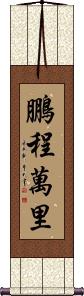
鵬程萬里 is an ancient Chinese proverb used in modern times to wish someone a long and successful career.
It's really about the 10,000 Flight of the Peng (Peng, also known as Roc is a mythical fish that can turn into a bird and take flight).
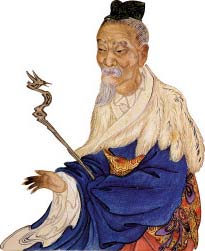
莊子
Zhuangzi or Chuang Tzu
Breaking down each character:
1. Peng or Roc (a kind of bird).
2. Journey (in this case, a flight).
3. 10,000 (Ten Thousand).
4. Li is a unit of distance often referred to as a “Chinese Mile,” though the real distance is about half a kilometer.
Direct Translation: “Peng's Journey [of] 10,000 Li.”
Literal meaning: “The 10,000-Li Flying Range Of The Roc.”
Perceived meaning: “To have a bright future” or “To go far.”
This proverb/idiom comes from the book of Zhuangzi or Chuang Tzu. It tells the tale of a huge fish that could turn into a gigantic bird. This bird was called a “peng” and was many miles long. This legendary size allowed the Peng to fly from the Northern Sea to the Southern Sea in a single bound.
Wishing someone “a Peng's Journey of 10,000 Li” will imply that they can travel far without stopping and will have great success, a long career, and a prosperous future.
Bright and Promising Future
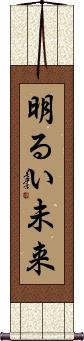
明るい未来 is a Japanese proverb that means “Bright Future.”
It suggests a lot of possibilities and potential awaits in your future. A great gift for a graduate.
The first part of this proverb literally means bright or light. The second part means the future but can also be translated as “the world to come.”
Note: Because this selection contains some special Japanese Hiragana characters, it should be written by a Japanese calligrapher.
Light / Bright and Promising Future
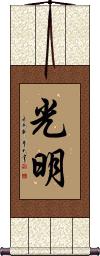
光明 is a nice way to say “light” in Chinese and old Korean Hanja.
This is because the word also suggests a bright future or refers to someone who is very promising (great future potential).
The first character means light or bright.
The second character means bright and clear (in this context).
This word appears in most Japanese dictionaries, but it is not the most common Japanese Kanji word for light (more commonly used for the name Mitsuharu).
In old Korean Hanja, this can also mean brightness or brilliance.
In the context of Buddhism, this means “Light emanating from a Buddha or Bodhisattva, symbolizing their wisdom and compassion.”
Reiki - Master Symbol
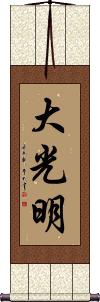
大光明 is the master symbol “Daikomyo” or “Dai Ko Myo,” which is usually associated with the healing practice of Reiki.
This title can be translated as “Great Bright Light.” This symbol, as used in Reiki, alludes to “Enlightened Nature” or the radiance of a purified soul or deity.
Pronunciations in Chinese and Korean are included above but this title has no meaning except when used by a Reiki practitioner. In fact, this title is not that well known by those outside the Reiki community in Japan.
In Chinese, this would be interpreted as “Great Bright Future” (the second two characters alone create a word that means “bright future” in Chinese).
Fatal error: Cannot redeclare function foreignPrice() (previously declared in /home/gwest/web/chinesescrollpainting.com/public_html/includes/currencyconverter.php:22) in /home/gwest/web/orientaloutpost.com/public_html/includes/currencyconverter.php on line 22