Many custom options...


And formats...



Family Over Everything in Chinese / Japanese...
Buy a Family Over Everything calligraphy wall scroll here!
Personalize your custom “Family Over Everything” project by clicking the button next to your favorite “Family Over Everything” title below...
2. Safety and Well-Being of the Family
3. Happy Family
6. Happy Family
10. Family / Members of a Family
11. Family Love
13. Family Love / Domestic Bliss
14. Any success can not compensate for failure in the home
15. Spare the Rod, Spoil the Child
17. Brotherly and Sisterly Love
18. Never Give Up
19. No one knows a son better than the father
20. No man knows what he owes to his parents until he comes to have children of his own
21. Child
22. God Daughter
23. Grand Daughter
24. Loving Mother
26. Karateka
27. Guevara
28. Wolverine
29. Bless this House
30. Felina / Felidae / Felinae
31. Hung Gar
32. White
33. Bond
34. Inner Strength is Better than Outward Appearance
35. Good Health / Healthy / Vigor
36. McGough
37. Faulkner
38. Gilleo
39. Wagner
40. Lockhart
41. Morales
42. Villalobos
43. Flowers
44. Manolis
45. Gunn
46. Mazo
47. Husemann
48. Hedgehog
50. Confucius
51. Sasuga / Takaya
52. Lee / Plum
53. Acceptance
54. White Stork
55. Soke / Shuke
56. Kishan
57. Shark
58. Daodejing / Tao Te Ching - Chapter 54
60. First Born
61. Hung Ga Kuen
63. Swallow
66. Bruce Lee
67. Suzuki
68. Divine Grace
70. Renni
72. Lau Gar Kung Fu
73. Glory and Honor
74. Orchid
75. Life of Love
76. Dignity / Honor / Sanctity / Integrity
78. Loyalty
79. Ox / Bull / Cow
80. King
81. Home of the Auspicious Golden Dragon
83. Hua Mulan
84. Respect
85. Katana
86. The Mysterious Bond Between People
87. Choose Life
88. Mountain Travels Poem by Dumu
89. Singleton
Family Over Everything
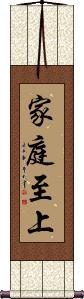
家庭至上 is a Chinese phrase that means “family above all else.”
The first two characters mean family, household, or home (they will be read as “family” in this case).
The last two characters mean supreme, paramount, or above all else.
Safety and Well-Being of the Family
Kanai Anzen
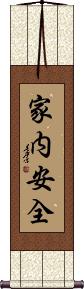
家內安全 is the Japanese way of saying “Family First.”
It's a Japanese proverb about the safety and well-being of your family and/or peace and prosperity in the household.
Some Japanese will hang an amulet in their home with these Kanji. The purpose is to keep your family safe from harm.
According to Shinto followers, hanging this in your home is seen as an invocation to God to always keep family members free from harm.
We were looking for a way to say “family first” in Japanese when this proverb came up in the conversation and research. While it doesn't say “family first,” it shows that the safety and well-being of your family is your first or most important priority. So, this proverb is the most natural way to express the idea that you put your family first.
See Also: Peace and Prosperity
Happy Family
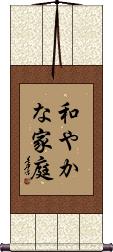
和やかな家庭 means “happy family” or “harmonious family” in Japanese.
The first three Kanji create a word that means mild, calm, gentle, quiet, or harmonious. After that is a connecting article. The last two Kanji mean family, home, or household.
Note: Because this selection contains some special Japanese Hiragana characters, it should be written by a Japanese calligrapher.
Forever Family
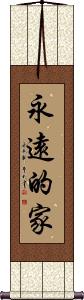
永遠的家 is a special phrase that we composed for a “family by adoption” or “adoptive family.”
It's the dream of every orphan and foster child to be formally adopted and find their “forever family.”
The first two characters mean forever, eternal, eternity, perpetuity, immortality, and/or permanence. The third character connects this idea with the last character which means “family” and/or “home.”
See Also: Family
Family / Household
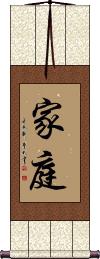
家庭/傢庭 is a common way to express family, household, or home in Chinese, Japanese Kanji, and old Korean Hanja.
However, for a wall scroll, we recommend the single-character form (which is just the first character of this two-character word). If you want that, just click here: Family Single-Character
The first character means “family” or “home.” The second means “courtyard” or “garden.” When combined, the meaning is a bit different, as it becomes “household” or “family.” The home and/or property traditionally has a strong relationship with family in Asia. Some Chinese, Korean, and Japanese families have lived in the same house for 7 or more generations!
Happy Family
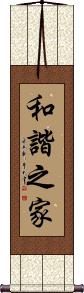
和諧之家 means “harmonious family” or “happy family” in Chinese.
The first two characters relay the idea of happiness and harmony.
The third character is a connecting or possessive article (connects harmony/happiness to family).
The last character means family but can also mean home or household.
Family / Home
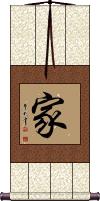
家 is the single character that means family in Chinese and Japanese.
It can also mean home or household depending on context.
Hanging this on your wall suggests that you put “family first.”
Pronunciation varies in Japanese depending on context. When pronounced “uchi” in Japanese, it means home, but when pronounced “ke,” it means family.
 Note that there is an alternate form of this character. It has an additional radical on the left side but no difference in meaning or pronunciation. The version shown above is the most universal, and is also ancient/traditional. The image shown to the right is only for reference.
One Family Under Heaven
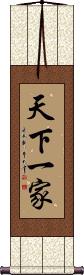
天下一家 is a proverb that can also be translated as “The whole world is one family.”
It is used to mean that all humans are related by decree of Heaven.
The first two characters can be translated as “the world,” “the whole country,” “descended from heaven,” “earth under heaven,” “the public,” or “the ruling power.”
The second two characters can mean “one family,” “a household,” “one's folks,” “a house” or “a home.” Usually, this is read as “a family.”
Note: This proverb can be understood in Japanese, though not commonly used.
Family Bond / Family Ties
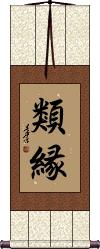
類縁 is a Japanese word that means affinity or family relationship.
This is about the bond shared by blood within a family or those from the same ancestor.
Family Bond / Family Ties
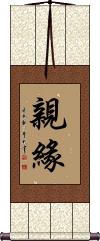
親緣 is a Chinese word that means affinity, family relationship, or consanguinity.
This speaks of the family bonds we have with others that share the same blood or ancestors.
Family / Members of a Family
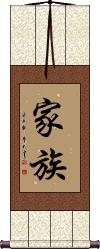
家族 is family in Japanese Kanji, Chinese and Korean.
This represents all the members of a family.
This can also mean household or clan, depending on the context.
Family Love
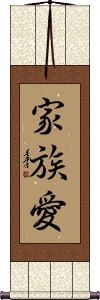
家族愛 is a Japanese title that means love of (one's) family, family love, or familial love.
Family Love
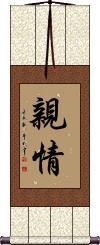
親情 means affection, especially for family members.
This can also be translated as “family love” or “love, especially within a married couple or between parents and children.”
Family and Friends
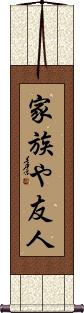
家族や友人 means “family and friends,” in Japanese.
Family and Friends
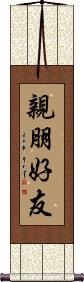
親朋好友 is a Chinese title that simply means “family and friends” or “kith and kin.”
If you read each character more literally, it's like, “relatives, friends, [and] good/close friends.”
Family Love / Domestic Bliss
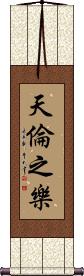
天倫之樂 means family love and joy, or domestic bliss.
The first two characters mean “the bonds of the family.”
The third character connects this to the fourth character which means happiness, joy, and cheerfulness.
Any success can not compensate for failure in the home
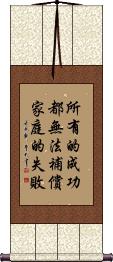
所有的成功都無法補償家庭的失敗 is a Chinese proverb that can be translated into English as “No success can compensate for failure in the home.”
Also, the word “home” can be exchanged with “family.”
Spare the Rod, Spoil the Child
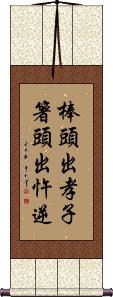
棒頭出孝子箸頭出忤逆 literally translates as:
A stick (or switch) produces filial sons; chopsticks produce disobedient [ones].
Figuratively, this means:
Strict discipline produces dutiful children, whereas indulgence produces disobedient ones.
This proverb is very similar to this English proverb:
“Spare the rod and spoil the child.”
Mother and Daughter
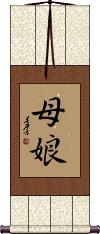
母娘 means “mother and daughter” in Japanese Kanji.
母娘 is an unusual selection for a calligraphy wall scroll and can be read in many different ways. Your native Japanese friends might wonder what you are trying to say.
Note: This will not make sense in Chinese.
See Also: Mother and Son
Brotherly and Sisterly Love
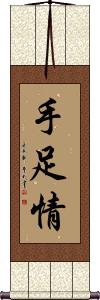
手足情 is the love between siblings.
When you love, protect, care for, and have a deep bond that only brothers or sisters can.
The actual translation is “Hand and Foot,” but the relationship between brothers or sisters is like that of hands and feet. They belong together and complete the body. Even though this says “hand and foot,” it will always be read with the brotherly and sisterly love meaning in Chinese.
Note: During the past 20 years, the “One child policy” in China is slowly making this term obsolete.
Never Give Up
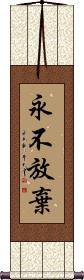
The first character means “eternal” or “forever,” and the second means “not” (together, they mean “never”). The last two characters mean “give up” or “abandon.” Altogether, you can translate this proverb as “never give up” or “never abandon.”
Depending on how you want to read this, 永不放棄 is also a statement that you will never abandon your hopes, dreams, family, or friends.
No one knows a son better than the father
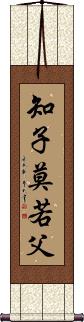
知子莫若父 can be translated as “No one knows a son better than his father.”
This idiom is based on the idea that after spending many years together, family members know everything about each other. Better than anyone else, a father knows the qualities and shortcomings of his son.
If you are looking for something about “father and son,” this is probably the best selection.
While this is the original proverb (very old), others have been composed about various combinations of mothers, sons, daughters, and fathers. Let me know if you need a custom version.
No man knows what he owes to his parents until he comes to have children of his own
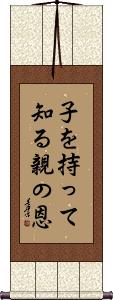
子を持って知る親の恩 literally translates as: Only after you have a baby, you would appreciate your parents (feel the way they do, etc).
This is a bit like the “walk a mile in another man's shoes” saying. Basically, it's about you cannot fully understand the plight of others until you experience it yourself. It also shows appreciation for the plight of parents.
This Japanese proverb can also be translated a few more ways:
No man knows what he owes to his parents till he comes to have children of his own.
One knows not what one owes to one's parents till one comes to have children of one's own.
Only after you have a baby, you will appreciate your parents or feel the way they do.
Only after becoming a parent yourself do you realize how much you owe [how indebted you are] to your own parents.
Note: Because this selection contains some special Japanese Hiragana characters, it should be written by a Japanese calligrapher.
Child
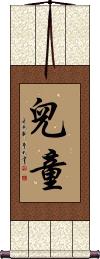
兒童 is how to write “child” in Chinese.
There are several ways to write child or offspring in Chinese, but this is the best form for calligraphy, or written (versus oral) form.
If children are essential to you, this might be the scroll you want. Or if you are a child at heart, this also works.
 In Japanese, they use a slightly-morphed version of the original Chinese first character. If you want the special Japanese version, please click on the Kanji image shown to the right, instead of the button above. Note: Japanese people would still be able to understand the Chinese version and vice versa.
See Also: Family
God Daughter
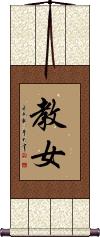
教女 is the title for a female child, which you have a sworn duty to raise should the girl's parents die.
The second character specifically designates that we are talking about a female child, thus the title God Daughter.
See Also: Family
Grand Daughter
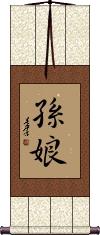
Loving Mother
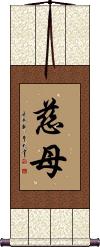
Mama / Mother / Mommy
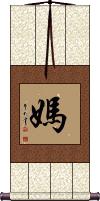
媽 is the oral way that most Chinese people refer to their mothers. Often, they will put this together twice (two of the same character in a row) to create a word that sounds like “Mama.” That's absolutely what little kids call their mothers in China. This Chinese “Mama” is the rough equivalent of “Mommy” in English. Beyond a certain age, Chinese will start to just say “Ma,” which is like saying “Mom.”
This entry is just here for a language lesson. This would make a strange wall scroll by Chinese standards. In Chinese, there are sometimes oral words that don't seem appropriate when written in calligraphy, and this is one of them. See our entry for “Loving Mother” for a better selection.
See Also: Loving Mother | Family
Karateka
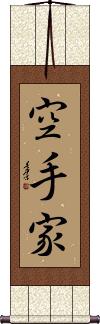
空手家 is the Japanese word Karateka, which means karate practitioner.
The literal translation is “empty hand family” or “karate family,” suggesting you are a member of the karate family.
Guevara
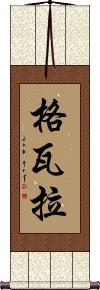
This is the Spanish family name, Guevara.
Probably the most famous person to have this family name is Ernesto “Che” Guevara, the Cuban / Latin American revolutionary.
Wolverine
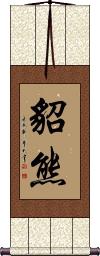
貂熊 art the Chinese characters and Japanese Kanji for wolverine.
Also known as “gulo gulo,” glutton, carcajou, skunk bear, or quickhatch. The wolverine is the largest land-dwelling species of the family Mustelidae (weasel family).
Bless this House
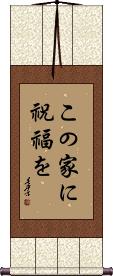
This means “Bless this house” or “Bless this home,” in Japanese.
Some may also translate this as “Bless this family,” since the Kanji for home can also mean family.
Note: Because this selection contains some special Japanese Hiragana characters, it should be written by a Japanese calligrapher.
Felina / Felidae / Felinae
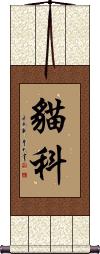
貓科 is the Chinese way to write Felidae, Felina, or Felinae (the cat family).
In Japanese, they use a slightly different first character and write 猫科, and pronounce it “nekoka” instead of the original 貓科.
Also, in Chinese, sometimes the title for the sub-family of cats is 猫亚科 for Felinae. If you need a special term, just contact me.
Hung Gar
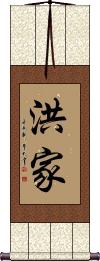
洪家 is the martial arts title Hung Ga or Hung Gar.
The first character means flood, big, immense, or great but it can also be the surname, Hong or Hung.
The last character means family or home.
This can also be read as “The Hung Family” or “The Hung Household.” This title is mostly associated with a style of Kung Fu.
White
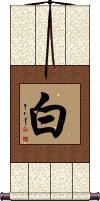
A lot of people search our website for “white.” I am not sure of the purpose unless your family name is white.
白 is the universal character for white in Chinese, Japanese Kanji, and old Korean Hanja.
In a certain context, outside of the white definition, it can mean snowy, empty, blank, bright, clear, plain, pure, or innocent. In Korean, this can be a family name romanized as Paek or Baeg.
Bond
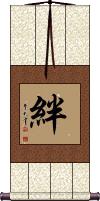
This Kanji represents a bond, as in the bond between mother and daughter, father and son, family ties, or a family bond.
絆 is the kind of character that says, no matter what happens (difficult times), we have this bond that cannot be broken.
If you go to the Japanese dictionary, the definition is the bonds (between people), (emotional) ties, relationship, connection, link, tether, or fetters.
Read this before ordering...
This Kanji is best if your audience is Japanese. While this is also a Chinese character, it has a completely different meaning in Chinese (it means to hinder or stumble in Chinese).
it’s
a very rare character in Korean Hanja but does mean bond in Korean (used in Korean words for certain kinds of glue and sticking plaster).
Inner Strength is Better than Outward Appearance
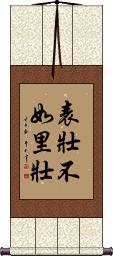
表壯不如里壯 literally translates as: [Better to be] strong inside than [to be] strong outside.
The ancient original meaning was:
[An] able [husband] outside [working to support a family is] not as good as [an] able [wife] inside [working and saving to take care of the family].
The current meaning is:
Inner strength is more important than outward appearance.
Good Health / Healthy / Vigor
Also suggests being at peace
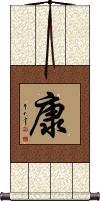
康 is a single character that means good health or vigor in Chinese, Japanese Kanji, and old Korean Hanja.
康 can also mean peaceful, at ease, or abundant in some contexts.
Please note that this is rarely seen alone in Japanese Kanji. In Japanese, it is used both for health-related compound words and to denote the kouhou through koushou eras of Japan.
In Korean, this can also be the family name “Kang” (caution: not the only family name romanized as Kang in Korean).
McGough
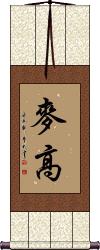
麥高 is the transliteration to Mandarin Chinese for the family name McGough.
Faulkner
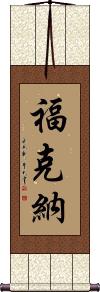
福克納 is the transliteration to Mandarin Chinese for the family name Faulkner.
Gilleo
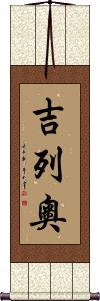
This is the family name Gilleo transliterated into Mandarin Chinese.
Wagner
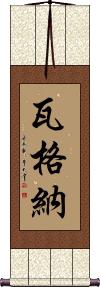
瓦格納 is the transliteration to Mandarin Chinese for the family name Wagner.
Note: We only offer family names upon special request. This entry in our database is the result of one of these requests.
Lockhart
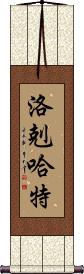
洛剋哈特 is the transliteration to Mandarin Chinese for the family name Lockhart.
Morales
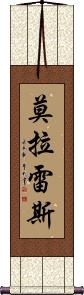
莫拉雷斯 is the transliteration to Mandarin Chinese for the family name Morales.
Villalobos
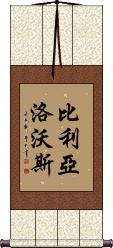
比利亞洛沃斯 is the transliteration to Mandarin Chinese for the family name Villalobos.
Flowers
(family name)
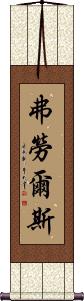
弗勞爾斯 is the transliteration to Mandarin Chinese for the family name Flowers.
This sounds like "Flowers" in Mandarin Chinese but does not mean flowers in any way, shape or form. I strongly suggest the single character which means "flower" in Chinese, Japanese Kanji, and old Korean Hanja.
See Also: Flower
Manolis
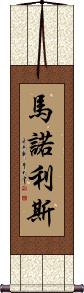
馬諾利斯 is the transliteration into Mandarin Chinese, for the Greek family name, Manolis.
Gunn
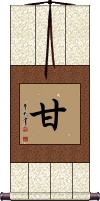
Mazo
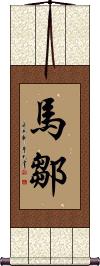
馬鄒 is the transliteration to Mandarin Chinese for the Spanish family name (surname) Mazo.
Husemann
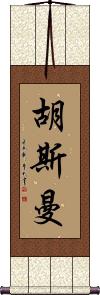
胡斯曼 is the best transliteration to Mandarin Chinese for the family name Husemann.
Hedgehog
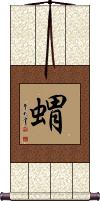
蝟 is the Chinese, Japanese Kanji, and old Korean Hanja for hedgehog (any mammal of the family Erinaceidae).
Wisteria / Wistaria
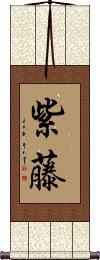
紫藤 is the Chinese name for the climbing woody vines of the genus Wisteria in the pea family featuring purplish or white flowers.
Confucius
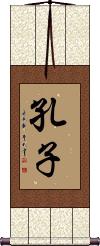
孔子 is how to write the name of the great sage, known in the West as Confucius.
His real name is Kongzi (The name Confucius is a westernized version of his name - his family name is Kong, and “zi” was added as a title of distinction).
He lived some 2500 years ago in Qufu, a town in modern-day Shandong Province of Northern China (about 6 hours south of Beijing by bus). He was a consort to Emperors, and after his death, the impact of his philosophies still served to advise emperors, officials, and common people for generations.
Also during these thousands of years, the Kong family remained powerful in China, and the Kong estate was much like the Vatican in Rome. The Kong estate existed as if on sovereign ground with its own small garrison of guards and the privileges of a kingdom within an empire.
This was true up until the time the Kong family had to flee to Taiwan in 1949 when the Red Army took victory over the Nationalists during the Revolution. The home of Confucius was later razed and all statues were defaced or stolen during the Cultural Revolution. Finally, after years of smearing his name and image, it is once again okay to celebrate the teachings of Confucius in mainland China.
Known as Khổng Tử in Vietnamese.
Sasuga / Takaya
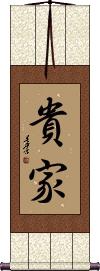
This can romanizes as the Japanese surnames Takaya, Takatsuka, Sasuga, Kiya, or Kika.
As a word, it is a respectful way to refer to someone's home (or family).
Lee / Plum
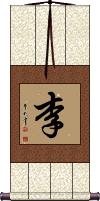
This is the most common Chinese character which sounds like “Lee” or “Li” and is used as a surname / family name in China.
李 actually means “Plum.” So it's really Mr. Plum and Mrs. Plum if you translated the name instead of romanizing.
This is not the only character in Chinese that can be romanized as “Lee” or “Li.” If your family name is “Lee” or “Li” please be sure this is the correct character before you order this scroll (look at your grandparents' Chinese passports or other documents if you are an ABC and are trying to create a heritage wall scroll).
Famous people with this surname include Bruce Lee (Li Xiao-Long), Minister Li Peng, and famous Tang Dynasty poet Li Bai.
In Korea, this is the original character for a surname that romanizes as “Yi.”
Note: This also one version of Lee that is a common Korean surname. However, it’s often romanized as "Yi" and sometimes as "Ri" or "Rhee."
Acceptance
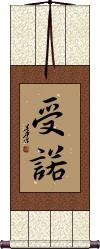
受諾 is a simple Japanese word for acceptance.
Because it's a general term, it can mean acceptance in a lot of different contexts (acceptance of your friends, family, differences, faults, etc.).
White Stork
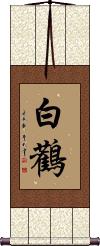
白鸛 means “white stork.”
The scientific name of this Chinese bird species is Ciconia ciconia from the stork family Ciconiidae.
Soke / Shuke
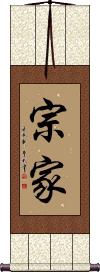
宗家 is a Japanese word that means “head of the family” or “originator.”
In Chinese, this is an honor name for Shandao (善導), a writer of commentaries on the sutras of the Pure Land sect of Buddhism.
Kishan
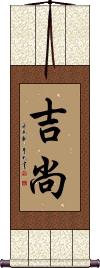
This an alternate transliteration to Mandarin Chinese for the name Kishan.
We like this one better because of the way it sounds, and the good meaning. 吉尚 is also a rare but real family name in Chinese culture.
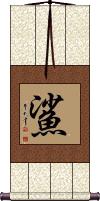
This single Chinese character means shark.
However, in Japanese, it can refer to the family of goby fish.
鯊 is good if you're looking for the word shark in Chinese and Japanese folks might misunderstand it.
Daodejing / Tao Te Ching - Chapter 54
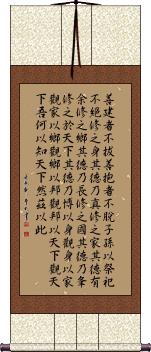
This is the Mawangdui version of Daodejing chapter 54.
By its virtue alone can one generation after another carry on the ancestral sacrifice.
Apply it to yourself, and by its power, you will be freed from dross.
Apply it to your household, and your household shall thereby have abundance.
Apply it to the village, and the village will be made secure.
Apply it to the kingdom, and the kingdom shall thereby be made to flourish.
Apply it to an empire, and the empire shall thereby be extended.
Therefore just as through oneself, one may contemplate Oneself;
So through the household one may contemplate the Household;
And through the village, one may contemplate the Village;
And through the kingdom, one may contemplate the Kingdom;
And through the empire, one may contemplate the Empire.
How do I know that the empire is so? By this.
What is firmly rooted cannot be pulled out;
What is tightly held in the arms will not slip loose;
Through this, the offering of sacrifice by descendants will never come to an end.
Cultivate it in your person, and its virtue will be genuine;
Cultivate it in the family, and its virtue will be more than sufficient;
Cultivate it in the hamlet, and its virtue will endure;
Cultivate it in the state, and its virtue will abound;
Cultivate it in the empire, and its virtue will be pervasive.
Hence look at the person through the person;
Look at the family through the family;
Look at the hamlet through the hamlet;
Look at the state through the state;
Look at the empire through the empire.
How do I know that the empire is like that?
By means of this.
Diligent Study Proverb
Drill a hole in the wall to get light to read by.
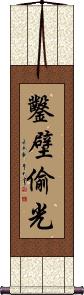
鑿壁偷光 is a Chinese proverb that means “Bore a hole in the wall to make use of the neighbor's light to study.”
This is a nice gift for a very studious person.
Kuang Heng was born during the Western Han period. He has been very fond of reading ever since he was young. However, he could not attend school since his family was poor, and he had to borrow books from people to learn.
To borrow these books, he normally did chores for people who had them. When he became older, he had to work in the field from sunrise to sunset since his family's financial situation did not improve. Thus, he tried to study at night, but he had no lamp.
One day, he noticed the light from the neighbor's house coming through a crack in the wall. This made him very happy, so he dug a larger hole from the crack and read in the light that shone through. This diligent study eventually made him an accomplished person.
First Born
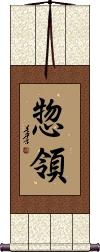
惣領 is a Japanese title for the eldest child, the oldest child, firstborn child, or child who carries on the family name.
In more ancient times, this was used to refer to the head of a warrior clan. It can also be a place name or given name “Souryou” or “Soryo” in Japanese.
Hung Ga Kuen
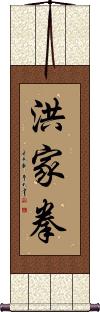
洪家拳 is the martial arts title Hung Ga Kuen.
The first character means flood, big, immense, or great but it can also be the surname, Hong or Hung.
The second character means family or home.
The last character is a fist.
Home of the Dragon
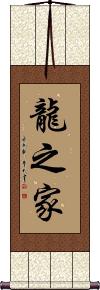
Added by special request of a customer. This phase is natural in Chinese, but it is not a common or ancient title.
The first character is dragon.
The second is a possessive modifier (like making “dragon” into “dragon's”).
The third character means home (but in some context can mean “family” - however, here, it would generally be understood as “home”).
Swallow
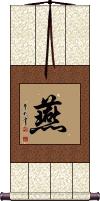
燕 is the single character for the swallow (bird).
If you are a zoologist, this can refer to birds of the family Hirundinidae. Sometimes used to refer to Hirundo rustica (the barn swallow).
燕 is also a surname in China that is romanized as Yan. In fact, there were also several different Yan kingdoms in the ancient history of China (which is the origin of the surname).
Home of the Black Dragon
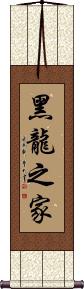
黑龍之家 was added by special request of a customer. This phase is natural in Chinese, but it is not a common or ancient title.
The first character is black.
The second is dragon.
The third is a possessive modifier (like making “dragon” into “dragon's”).
The fourth character means home (but in some context can mean “family” - however, here it would generally be understood as “home”).
Courtesy / Politeness
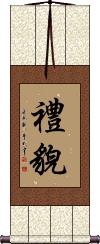
禮貌 is a Chinese and old Korean word that means courtesy or politeness.
Courtesy is being polite and having good manners. When you speak and act courteously, you give others a feeling of being valued and respected. Greet people pleasantly. Bring courtesy home. Your family needs it most of all. Courtesy helps life to go smoothly.
If you put the words "fēi cháng bù" in front of this, it is like adding "very much not." it’s a great insult in China, as nobody wants to be called "extremely discourteous" or "very much impolite."
Bruce Lee
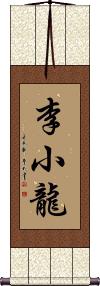
李小龍 is the real full name of Bruce Lee.
 Many people have no idea that Bruce Lee had a “real” Chinese name. In Mandarin and Cantonese, he is known as “Lǐ XiǎoLóng” and “Léi SíuLùng” respectively.
He kept his family name pronunciation (Li = Lee). 李 is a common family name that also means “plum.”
His given name 小龍 (Xiao-Long), literally means “little dragon.” 李小龍 is why you often see the character for dragon associated with Bruce Lee on various posters etc.
For a pronunciation lesson, the “X” in Romanized Mandarin is pronounced like a “sh” sound but with your tongue at the bottom of your mouth. The vowel sound in “Long” is like the English “oh,” not like the “ah” sound in the English word “long.”
If you are a big Bruce Lee fan, you should know this information, and you should have this wall scroll hanging in your room or martial arts studio.
Note: Japanese use these same Chinese characters / Kanji to write Bruce Lee's real name (with different pronunciation - which is a bit like how the name “Bruce Lee” sounds in English).
See Also: Kung Fu | Martial Arts
Suzuki
Surname
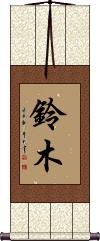
This is the Japanese surname, Suzuki.
This is the family name of the founder of Suzuki Loom Company, which later became Suzuki Motor Corporation.
This name can also be romanized as Sudzuki; Suzushi; Suzuko; Susuheki; Susugi; Susuki.
Chinese pronunciation is shown above but this is recognized as a Japanese surname when read in Chinese.
Divine Grace
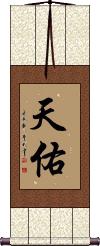
天佑 is a Chinese and Japanese word that means divine aid, divine grace, Heaven blessed, or providential help.
Some Chinese people will use this to infer that this means a home or family blessed by heaven or God. 天佑 is the shortest way to express that idea anyway.
Love and Devotion
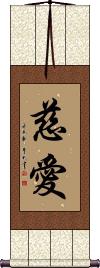
慈愛 refers to the kind of love and devotion you might have to your children or any loved one.
This especially applied to your children but could also be any member of your family - spouse, etc.
This can also be translated as affection, kindness, love, to love affectionately.
慈愛 is also used in a Buddhist context with the same meaning.
In Japanese, this can also be a female given name romanized as Yasue.
Renni
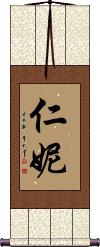
This is a name Renni in Mandarin Chinese. The name literally means “benevolent girl” in Chinese.
I kind of made up this name when my second daughter was born. The idea came for a feeling I got after performing a benevolent act for a poor family in Southern China. I want my daughter to follow that mode, and experience the same feeling one can only experience by doing benevolent acts.
Strong and Beautiful
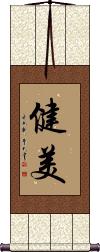
We don't really have a word like 健美 in English, but these two characters create a word that means “strong and beautiful.” It could also be translated as “healthy and beautiful.”
Note: 健美 is a word in Chinese and Korean, but it's also the family name Takemi in Japanese. The characters hold the same meaning in Japanese; however, it's like having the English name Stillwell when few people would perceive the meanings of still and well.
Lau Gar Kung Fu
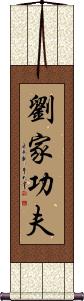
劉家功夫 are the characters for the Lau Gar Kung Fu style of martial arts.
The romanization of “Lau Gar” comes from Cantonese. “Kung Fu” is the common romanization for English from the Mandarin “Gōng Fu” or Cantonese “Gung Fu” pronunciations.
Lau gar = Lau family.
Glory and Honor
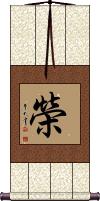
榮 relates to giving someone a tribute or praise.
It's a little odd as a gift, so this may not be the best selection for a wall scroll.
I've made this entry because this character is often misused as “honorable” or “keeping your honor.” It's not quite the same meaning, as this usually refers to a tribute or giving an honor to someone.
榮 is often found in tattoo books incorrectly listed as the western idea of personal honor or being honorable. Check with us before you get a tattoo that does not match the meaning you are really looking for. As a tattoo, this suggests that you either have a lot of pride in yourself or that you have a wish for prosperity for yourself and/or your family.
 In modern Japanese Kanji, glory and honor look like the image to the right.
There is a lot of confusion about this character, so here are some alternate translations for this character: prosperous, flourishing, blooming (like a flower), glorious beauty, proud, praise, rich, or it can be the family name “Rong.” The context in which the character is used can change the meaning between these various ideas.
In the old days, this could be an honor paid to someone by the Emperor (basically a designation by the Emperor that a person has high standing).
To sum it up: 榮 has a positive meaning; however, it's a different flavor than the idea of being honorable and having integrity.
Orchid
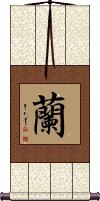
蘭 is the character for the orchid in Chinese, Japanese Kanji, and old Korean Hanja.
Also: Epidendrum.
蘭 is used in some contexts to mean fragrant, elegant, or refined.
蘭 can also be the Chinese family name romanized as “Lan.” However, it is not the only character that can be romanized as Lan.
In Japanese and Korean, this character means orchid but is also used as a suffix or short name for the Netherlands / Holland.
Life of Love
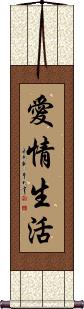
愛情生活 is the Chinese proverb for “Loving Life.” Some also translate this as “[your] Loving Life” or “Life full of Love.”
This is about being a loving person (to your spouse and/or family) during your life. This is not the same as loving the state of being alive - not “love of living” but rather “being a loving person during your life.”
Note: Korean pronunciation is included above, though use of this proverb in Korean has not been verified.
This proverb can be understood in Japanese but
it’s
primarily a Chinese proverb (it will "feel" Chinese to a Japanese person).
Dignity / Honor / Sanctity / Integrity
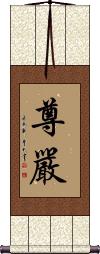
尊嚴 is a form of honor that means showing great respect for yourself, other people, and the rules you live by.
When you are honorable, you keep your word. You do the right thing regardless of what others are doing.
尊嚴 is the kind of personal honor or dignity that is of great value. If you lose this, you have lost yourself and perhaps the reputation of your family as well.
While this is not directly the same thing as “face” or “saving face” in Asian culture, it is associated with the same concept in China.
 In Japan, they currently use a more simplified second character for this word. The ancient Japanese form is the same as China but after WWII some Kanji were changed. If you want the modern Japanese version, just click on the Kanji image shown to the right, instead of the button above.
Chen / Chan / Yo / Jin
Surname
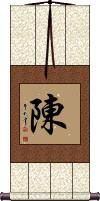
This is the most common character for a Chinese surname that romanizes as “Chen.”
This is also a surname You or Yo in Japanese, though it can also be pronounced as Chin in Japanese.
In Korean, it is a surname romanized as Jin.
As a word, this character means: to lay out; to exhibit; to display; to narrate; to state; to explain; to tell.
The Chen clan or family was a small kingdom from 1046 BC to 479 BC. It was one of 12 small-but-powerful vassal states during the Spring and Autumn Period 770-475 BC. This name reappeared as the Chen Dynasty (陳朝) of the Southern dynasties from 557 AD to 589 AD.
Loyalty
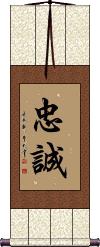
忠誠 is the written form of loyalty that is universal in Chinese, Japanese Kanji, and old Korean Hanja.
Loyalty is staying true to someone. It is standing up for something you believe in without wavering. It is being faithful to your family, country, school, friends, or ideals when the going gets tough and when things are good. With loyalty, you build relationships that last forever.
Notes:
1. There is also a Japanese version that is part of the Bushido Code which may be more desirable depending on whether your intended audience is Japanese or Chinese.
2. This version of loyalty is sometimes translated as devotion, sincerity, fidelity, or allegiance.
Ox / Bull / Cow
Year of the Ox / Bull - Zodiac Sign
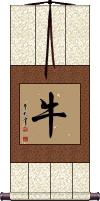
牛 is the character for bull, cow, ox, or bovine creature in Chinese, old Korean, and Japanese.
If you were born in the year of the ox/bull/cow, you . . .
Are dedicated to your work.
Are discrete, careful and conscientious.
Value work and family.
Note that in this Chinese character, there is no distinction between bull and cow. All bovine creatures fit into the definition of this character. To distinguish between male and female, another sex-designating character is added in front of this character. Therefore, in China, the energy drink “Red Bull” (Hong Niu) is often translated in the minds of Chinese people as “Red Cow” or even “Red Ox.”
See also our Chinese Zodiac page.
King
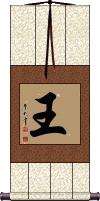
王 is wang which means king. It is not pronounced the way you think in Chinese. It is more like English speakers would want to pronounce wong. It has roughly the same vowel sound as tong, song, or long in English.
Note that this means king only, not the emperor. An emperor is higher than a king, and theoretically is chosen by God, according to ancient Chinese culture. However, the definition is often blurred at various points in Asian history.
王 can also be defined as ruler, sovereign, monarch, or magnate. It is also can refer to a game piece in the chess-like Japanese strategic game of shoji.
Note: This can also be a family name in Chinese, Korean and Vietnamese (in Vietnamese it's Vương).
See Also: Queen
Home of the Auspicious Golden Dragon
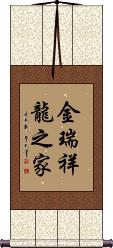
This 金瑞祥龍之家 or “home golden auspicious dragon” title was added by special request of a customer.
The first character means gold or golden.
The second and third characters hold the meaning of auspiciousness and good luck.
The fourth character is dragon.
The fifth is a possessive modifier (like making “dragon” into “dragon's”).
The last character means home (but in some context can mean “family” - however, here it would generally be understood as “home”).
Note: The word order is different than the English title because of grammar differences between English and Chinese. This phrase sounds very natural in Chinese in this character order. If written in the English word order, it would sound very strange and lose its impact in Chinese.
Note: Korean pronunciation is included above, but this has not been reviewed by a Korean translator.
Southern Praying Mantis
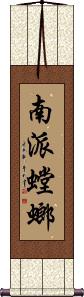
南派螳螂 can be translated literally as “Southern School Praying Mantis” or “Southern Style Praying Mantis.”
Despite its name, the Southern Praying Mantis style of Chinese martial arts is unrelated to the Northern Praying Mantis style. Southern Praying Mantis is instead related most closely to fellow Hakka styles such as Dragon and more distantly to the Fujian family of styles that includes Fujian White Crane, Five Ancestors, and Wing Chun.
This style of martial arts focuses more on fighting skills rather than aesthetics.
Of course, you already knew that if you were looking for this term.
Note: This title can be pronounced and does have meaning in Korean but only to Koreans familiar with Chinese martial arts.
Hua Mulan
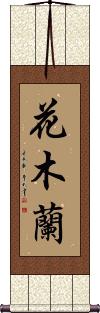
花木蘭 is the name of the famous Chinese woman warrior Hua Mulan.
She was made famous in the west by Disney's animated movie, “Mulan.”
Most of the historical information about her comes from an ancient poem. It starts with a concerned Mulan, as she is told a man from each family is to serve conscription in the army. Her father is too old, and her brother is too young. Mulan decides to take the place of her father. After twelve years of war, the army returns, and the best warriors are awarded great posts in the government and riches. Mulan turns down all offers and asks only for a good horse for the long trip home. When Mulan greets visiting comrades wearing her old clothes, they are shocked to find the warrior they rode into battle with for years is actually a woman.
Respect
Politeness, Gratitude and Propriety
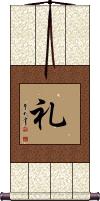
礼 is one of the five tenets of Confucius.
Beyond respect, 礼 can also be translated as propriety, good manners, politeness, rite, worship, or an expression of gratitude.
We show respect by speaking and acting with courtesy. We treat others with dignity and honor the rules of our family, school, and nation. Respect yourself, and others will respect you.
 Please note that Japanese use this simplified 礼 version of the original 禮 character for respect. 礼 also happens to be the same simplification used in mainland China. While 禮 is the traditional and original version, 礼 has been used as a shorthand version for many centuries. Click on the big 禮 character to the right if you want the Traditional Chinese and older Japanese versions.
This is also a virtue of the Samurai Warrior
See our page with just Code of the Samurai / Bushido here
See Also: Confucius
Katana
Japanese Samurai Sword
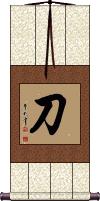
刀 is the Japanese Kanji for “sword.” This refers to the style of sword carried by warriors, samurai, and shogun of ancient Japan.
With the pacification of Japan, such swords are now only used for ceremony and decoration. The true art of sword-smithing is all but lost in Japan with new sword production dedicated to making inexpensive replicas for the tourist and foreign market.
For those of you that want to ask whether I can get you a real antique sword. Let me tell you that most real Asian swords were melted down after WWII in Japan, and during the Great Leap Forward in China. Any remaining swords are family heirlooms that nobody will part with.
Please carefully note that the Japanese kanji character shown above is only for a Japanese audience. In China, this character means “knife.” See our other entry for “sword” in Chinese.
Note: 刀 can mean knife, sword, or blade in Korean, depending on context.
See Also: Sword
The Mysterious Bond Between People
The invisible force that brings people together forever
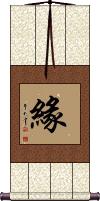
緣 represents the fate that brings and bonds people together.
緣 is a complicated single character. It can mean a lot of different things depending on how you read it.
In Japanese, it can mean fate, destiny, a mysterious force that binds two people together, a relationship between two people, bond, link, connection, family ties, affinity, opportunity, or chance (to meet someone and start a relationship). It can also mean “someone to rely on,” relative, reminder, memento, or the female given name, Yori.
It's the same in Chinese, where it's defined as cause, reason, karma, fate, or predestined affinity.
In the Buddhist context, it's Pratyaya. This is the concept of indirect conditions, as opposed to direct causes. It's when something happens (meeting someone) by circumstance or a contributing environment. Instead of a direct cause or act, it is a conditioning cause without direct input or action by the involved people.
Occasionally, this character is used in a facetious way to say hem, seam, or edge of clothing. In this case, it's the seam that brings or holds the clothing together.
 Note: Japanese will tend to use the variant of this Kanji shown to the right. If you want this version (and are ordering this from the Japanese master calligrapher), click on the Kanji at the right instead of the button above.
Choose Life
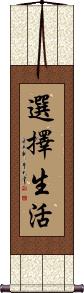
選擇生活 can mean to choose life instead of death (or suicide) or to choose to live life to the fullest.
I think of it as the key phrase used by Renton (Ewan McGregor) in the movie Trainspotting. While Chinese people will not think of Trainspotting when they see this phrase, for me, it will always be what comes near the end of this colorful rant:
Choose life. Choose a job. Choose a career. Choose a family. Choose a fucking big television. Choose washing machines, cars, compact disc players, and electrical tin can openers. Choose good health, low cholesterol, and dental insurance. Choose fixed-interest mortgage repayments. Choose a starter home. Choose your friends. Choose leisure wear and matching luggage. Choose a three-piece suite on-hire purchase in a range of fucking fabrics. Choose DIY and wondering who the fuck you are on a Sunday morning. Choose sitting on that couch watching mind-numbing, spirit-crushing game shows, stuffing fucking junk food into your mouth. Choose rotting away at the end of it all, pissing your last in a miserable home, nothing more than an embarrassment to the selfish, fucked-up brats you have spawned to replace yourself. Choose your future. Choose life.
Mountain Travels Poem by Dumu

This poem was written almost 1200 years ago during the Tang dynasty.
It depicts traveling up a place known as Cold Mountain, where some hearty people have built their homes. The traveler is overwhelmed by the beauty of the turning leaves of the maple forest that surrounds him just as night overtakes the day, and darkness prevails. His heart implores him to stop, and take in all of the beauty around him.
First, before you get to the full translation, I must tell you that Chinese poetry is a lot different than what we have in the west. Chinese words simply don't rhyme in the same way that English or other western languages do. Chinese poetry depends on rhythm and a certain beat of repeated numbers of characters.
I have done my best to translate this poem keeping a certain feel of the original poet. But some of the original beauty of the poem in its original Chinese will be lost in translation.
Far away on Cold Mountain, a stone path leads upwards.
Among white clouds, people's homes reside.
Stopping my carriage I must, as to admire the maple forest at nights fall.
In awe of autumn leaves showing more red than even flowers of early spring.
Hopefully, this poem will remind you to stop, and “take it all in” as you travel through life.
The poet's name is “Du Mu” in Chinese that is: 
 .
.
The title of the poem, “Mountain Travels” is: 

You can have the title, poet's name, and even “Tang Dynasty” written as an inscription on your custom wall scroll if you like.
More about the poet:
Dumu lived from 803-852 AD and was a leading Chinese poet during the later part of the Tang dynasty.
He was born in Chang'an, a city in central China and the former capital of the ancient Chinese empire in 221-206 BC. In present-day China, his birthplace is currently known as Xi'an, the home of the Terracotta Soldiers.
He was awarded his Jinshi degree (an exam administered by the emperor's court which leads to becoming an official of the court) at the age of 25 and went on to hold many official positions over the years. However, he never achieved a high rank, apparently because of some disputes between various factions, and his family's criticism of the government. His last post in the court was his appointment to the office of Secretariat Drafter.
During his life, he wrote scores of narrative poems, as well as a commentary on the Art of War and many letters of advice to high officials.
His poems were often very realistic and often depicted everyday life. He wrote poems about everything, from drinking beer in a tavern to weepy poems about lost love.
The thing that strikes you most is the fact even after 1200 years, not much has changed about the beauty of nature, toils, and troubles of love and beer drinking.
Singleton
Family Name
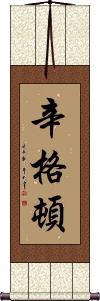
This is the Mandarin Chinese transliteration for the surname Singleton.
Fatal error: Cannot redeclare foreignPrice() (previously declared in /home/gwest/web/chinesescrollpainting.com/public_html/includes/currencyconverter.php:22) in /home/gwest/web/orientaloutpost.com/public_html/includes/currencyconverter.php on line 22