Many custom options...


And formats...



Fighter for God in Chinese / Japanese...
Buy a Fighter for God calligraphy wall scroll here!
Personalize your custom “Fighter for God” project by clicking the button next to your favorite “Fighter for God” title below...
See also: Bushido - Code of the Samurai Warrior
2. Fighter
6. Warrior Soul / Spirit of a Fighter
8. Guerrero
10. Dragon Warrior
11. Akuma
14. Dragon Warrior
15. Inner Warrior
17. Guan Yu
Fighter for God
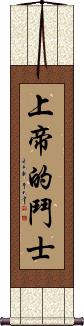
上帝的鬥士 means “God's Fighter.”
While a lot of people search for “Warrior of God,” or “Soldier of God,” this is actually the most natural way to say something like this in Chinese.
Fighter
Warrior / Soldier
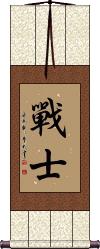
戰士 is how to write “fighter” in Chinese, ancient Japanese Kanji, and old Korean Hanja.
The first character means war, warfare, or battle.
The second character means soldier, officer, man, or pawn.
戰士 can also mean soldier or warrior. Usually this will be read as “fighter” or “one who fights.” 戰士 is an odd selection for a wall scroll unless you are a boxer, ultimate fighter, or otherwise participate in combat sports.
Other translations include combatant or champion.
 Note that after WWII, the first Kanji was reformed/simplified. This modern Japanese version is shown to the right. If you want this version, click on the Kanji to the right, instead of the button above.
Fighter / Champion
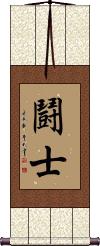
鬪士 / 闘士 is how to write “fighter” in Chinese and old Korean Hanja.
Chinese: 鬪士 / 闘士 is usually used to mean “fighter” in Chinese. It can also be translated as “warrior” or “activist.”
Korean: 鬪士 / 闘士 means fighter or champion (in terms of a fighter) in Korean Hanja.


 Note: The first character can also be written in three alternate ways, as shown to the right. Give us a note if you have a certain preference when you place your order.
Fighter / Champion
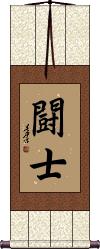
闘士 is how to write “fighter” in Japanese Kanji.
闘士 can mean “fighter for something,” militant, “champion of something/someone,” or gladiator, or may refer to a boxer in Japanese.
Freedom Fighter
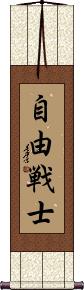
自由戦士 is “freedom fighter” in Japanese Kanji.
Warrior / Fighter
Senshi
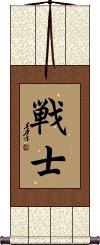
Warrior Soul / Spirit of a Fighter
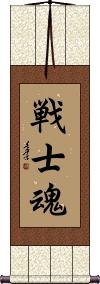
戦士魂 is “warrior soul” or “warrior spirit” in Japanese.
Here's the breakdown of the Kanji:
戦士 (senshi) warrior; soldier; combatant; fighter.
魂 (damashii/tamashii) soul; spirit; can sometimes mean “ghost.”
Fighting Spirit
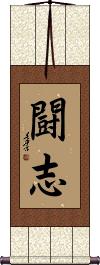
This literally means “fighting spirit” or “the will to fight.”
As in the spirit that a warrior, soldier, athlete, or fighter must possess.
Fighting Spirit
The Will to Fight
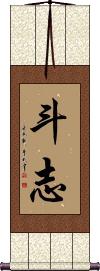
斗志 literally means fighting spirit in Chinese.
As in the spirit that a warrior, soldier, athlete, or fighter must possess.
 Note: There is more than one way to write the first character of this word. It is sometimes written like the version shown to the right (yes, it's completely different but has the same meaning & pronunciation). If you have a preference, please let us know in the special instructions about your order.
Fighting Spirit
Alternate Japanese version
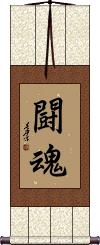
闘魂 is an alternate title with the meaning “fighting spirit” or “the will to fight.”
Fighting Spirit
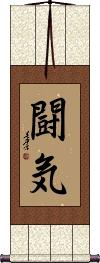
闘気 is an alternate Japanese title for “fighting spirit.”
This one is more like “fighting energy.” The second character is “ki,” the same “ki” in Aikido. This “ki” is the spiritual energy that all martial arts practitioners must master and focus on.
Guerrero
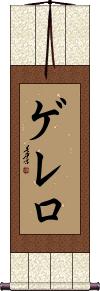
ゲレロ is the name Guerrero in Japanese.
The Spanish word Guerrero means fighter or warrior, so you could also use a translation and pick a word that means fighter instead of this transliteration.
Note: Because this title is entirely Japanese Katakana, it should be written by a Japanese calligrapher.
Heart of a Warrior
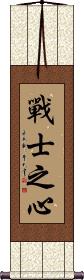
戰士之心 can mean “Heart of a Warrior” or “Heart of a Fighter” in Chinese.
Dragon Warrior
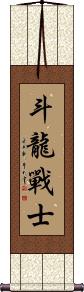
斗龍戰士 or “Dragon Warrior” is specifically one who fights against dragons.
This can also be read as “Dragon Fighter.”
Akuma
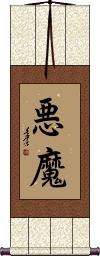
悪魔 is a Japanese word that means Devil, Demon, or Satan.
悪魔 is also the English/Japanese title for a character in Street Fighter.

 Note: In Japan, the Street Fighter is known as Gouki or Goki. This sort of means grand ghost, or great spirit. If you want this instead of the Akuma title, just click on the Goki Kanji to the right.
Kamikaze / Divine Wind
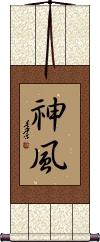
神風 is the famous title used during WWII to describe Japanese fighter plane pilots, many of whom performed suicide attacks by flying their planes into ships and other Allied targets.
The Japanese word, Kamikaze actually means “divine wind.”
See Also: Kamikaze
Freedom / Liberty
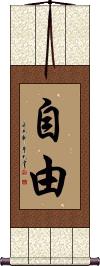
自由 is a common word to express the idea of freedom in both Chinese and Japanese.
This word is the essence of “being free” but also acts as the suffix to create words like freestyle swimming, free trade, civil liberties, free will, freedom fighter, religious freedom, and liberal.
Dragon Warrior
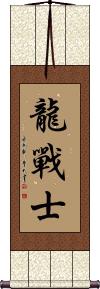
龍戰士 is another version of “Dragon Warrior.”
It's still a bit ambiguous. This one reads more like “Dragon Fighter” than “Dragon Warrior.” Perhaps you can also translate this one as “One who fights like a dragon.”
Inner Warrior
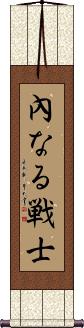
This means inner warrior in Japanese.
內なる means inner or internal.
戦士 means warrior or fighter.
Note: Because this selection contains some special Japanese Hiragana characters, it should be written by a Japanese calligrapher.
Warriors of Light
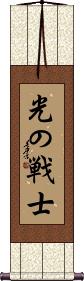
光の戦士 is the Japanese title for Warrior(s) of Light.
This usually refers to the Four Warriors of Light theme from the Final Fantasy series.
Also called Light Warriors, Warriors of the Light, Knights of Light, or Heroes of Light, depending on who is translating.
There are no direct plural forms in Japanese, so warrior or warriors is the same word, 戦士 (which can also be soldier, fighter, combatant, etc.).
Guan Yu
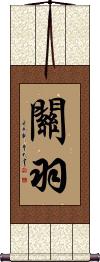
關羽 is the name Guan Yu, Army General for the Kingdom of Shu.
He is also known as Guan Gong (like saying Duke Guan or Sir Guan)
He was immortalized in the novel, “Romance of the Three Kingdoms.”
He was a fearsome fighter, also famous for his virtue and loyalty. He is worshiped by some modern-day soldiers and has the title “Warrior Saint” in China. Some believe he offers safety and protection for military servicemen.
Guan Yu lived until 219 A.D.
Enlightened Warrior
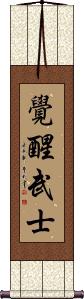
覺醒武士 is not a commonly used title in Chinese but is sometimes used in Martial arts and military contexts to refer to a warrior who seems always to be fully aware, enlightened, knowledgeable, noble, and just.
The first two characters are a word that means: to awaken; to come to realize; awakened to the truth; the truth dawns upon one; scales fall from the eyes; to become aware.
The last two characters mean warrior but can also refer to a samurai, soldier, or fighter.
Flying Tigers AVG
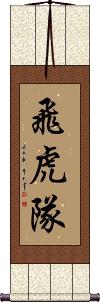
飛虎隊 is the full Chinese title of the “Flying Tigers Group.”
These were the American pilots that volunteered to go to China and fight the Japanese before the entry of the USA into World War Two. These fighter pilots were so esteemed in China that fallen American pilots could always find refuge in villages and safe passage and escape to areas of China that were not occupied by Japan at that time. Chinese villagers helped such fallen pilots with full knowledge that when the Japanese occupation forces found out, all the men, women, and children in the village would be massacred by Japanese troops (there are more than a few known cases of such massacres).
The Flying Tigers successfully kept supply lines to the Chinese resistance open and divided Japanese forces at a crucial time while America prepared to join WWII officially.
A wall scroll like this honors the men who risked or gave their lives as noble volunteers and is a reminder of the best moment in the history of Sino-American relations.
These three characters literally mean “flying tiger(s) group/team/squad.”
Note: Hanging these characters on your wall will not make you any friends with Japanese people who are aware or this history (most Japanese have no idea, as Japan’s involvement in WWII has all but been erased from school textbooks in Japan).
Fatal error: Cannot redeclare foreignPrice() (previously declared in /home/gwest/web/chinesescrollpainting.com/public_html/includes/currencyconverter.php:22) in /home/gwest/web/orientaloutpost.com/public_html/includes/currencyconverter.php on line 22