Many custom options...


And formats...



Not what you want?
Try other similar-meaning words, fewer words, or just one word.
Hong Kong in Chinese / Japanese...
Buy a Hong Kong calligraphy wall scroll here!
Personalize your custom “Hong Kong” project by clicking the button next to your favorite “Hong Kong” title below...
1. Hong Kong
3. Singapore
5. China
7. Tsang
8. Chow Yun-Fat
9. Wind Warrior
10. Fallen Angel
12. Sushi
13. Monkey Fist
14. Double Happiness Guest Book
15. Hapkido
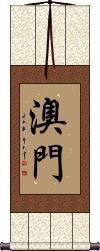
Hong Kong
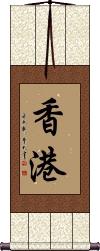
This is the Chinese and Japanese name for the Special Administrative Region (SAR) of The Peoples Republic of China known as Hong Kong (formerly a British administrated territory).
The romanization “Hong Kong” is probably a British approximation of the Cantonese pronunciation for this land.
See Also: Great Britain | China | Macao | Taiwan | Singapore | Japan | Vietnam | Korea | Asia
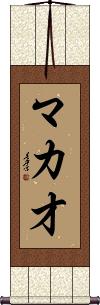
Macao / Macau
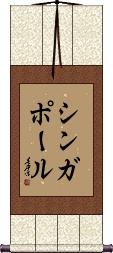
Singapore
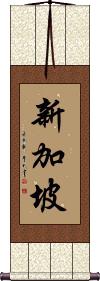
Singapore
Macao / Macau
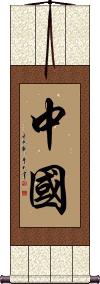
China
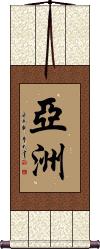
Asia / Asian Continent
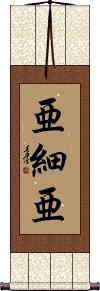
Asia / Asian Continent
Tsang
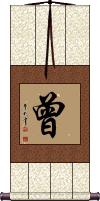
曾 is the name Cantonese/Hong Kong surname, Tsang.
Chow Yun-Fat
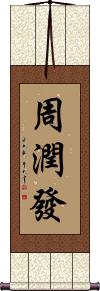
周潤發 is the name Chow Yun-Fat, the famous actor from Hong Kong.
Wind Warrior
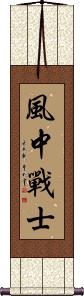
風中戰士 is the title Wind Warrior in Chinese.
Also the name of a 2005 Hong Kong movie.
Fallen Angel
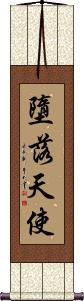
墮落天使 means “fallen angel” in Chinese.
墮落天使 is also the title of a 1995 movie that was popular in Hong Kong.
墮落 means to degrade, degenerate, become depraved, corrupt, fall from grace, or descend.
天使 means angel (more literally “heavenly messenger” or “divine messenger”).
Kingdom of Heaven
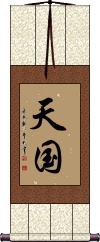
天国 is the same meaning and pronunciation as our other entry for “Kingdom of Heaven,” but the second character was simplified in Japan and mainland China to this version.
Choose the appearance that you like best (they will be somewhat universally understood - as most people are aware of this simplification in places where they still use all traditional characters - such as Taiwan and Hong Kong). You can consider the other version to be the “ancient version.”
Sushi
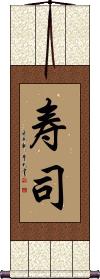
Got a 寿司/sushi restaurant and need an appropriate wall scroll? Or maybe you love sushi enough to have it on your wall. This sushi calligraphy scroll is for you.
Note that the written characters for sushi are the same in Chinese and Japanese. However, the first character is actually a modern Japanese / Simplified Chinese, so in some cases, it will be written differently in Taiwan, Hong Kong, and some older Japanese sushi restaurants where you might see 壽司 instead of 寿司.
Monkey Fist
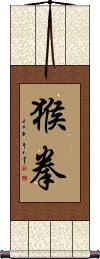
猴拳 literally means what you think, it's the “Monkey Fist” school of Kung Fu. A style that mimics the punches and movements of monkeys and apes.
Becoming popular during the Qing Dynasty, this style can trace its origins back to as early as the Song Dynasty. Some of the romance and popularity of this style comes from the novel “Journey to the West” which features the Monkey King and his fighting skills.
This novel and martial arts style has spawned a stream of Hong Kong movies featuring the Monkey King and other Kung Fu style variations such as “Drunken Monkey” and “Monkey Stealing Peaches” (a technique of disabling your opponent by grabbing and yanking on his testicles).
Note: This kind of makes sense in Korean Hanja and Japanese Kanji but probably unknown by all Koreans and Japanese except those who have an interest in this form of Kung Fu.
Double Happiness Guest Book
Customize a special Asian guest book for your wedding
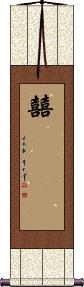
Start customizing a “Double Happiness Guest Book Wall Scroll” Here!
The paper panel length can be whatever you choose from 68cm to 135cm (27” to 53”).
If you don't mention what paper length you want in the special instructions tab (on the next page), we'll make it about 100cm (40”).
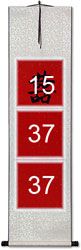
The medium-size scroll with a 33cm x 100cm (13” x 40”) paper panel can usually handle up to 89 signatures. That breaks down to 37 signatures per empty square and 15 signatures around the 囍 character. If you switch to a 135cm paper panel, add another 37 potential signatures.
We can splice two 135cm papers together, but that would be a crazy-long scroll. These are only estimates, your mileage may vary.
With silk panels, this will yield a wall scroll about 155cm (61”) long. That's enough for up to 89 signatures. Of course, that depends on if your guests just sign a brief salutation and name, or more verbose good wishes. Customer feedback is that 126 people can sign the 135cm long paper on a medium-sized scroll. If we go bigger than that, there will be a minor paper seam and an extra charge. Email me with your specifications if you need something special.
Most customers pick the festive red paper with gold flecks and white or ivory silk. Red is a good luck color in Chinese culture, thus the most popular choice. But, you can do any color combination that you want.
There is a long history of Chinese-character-use outside of mainland China. This Double Happiness character is also seen at weddings in Korea, Vietnam, Hong Kong, and Taiwan, as well as in Chinese communities in Thailand, Indonesia, and elsewhere. While Japan borrowed Chinese characters into their language, you won't see 囍 as often at Japanese weddings.
Hapkido
Korean Martial Art of re-directing force
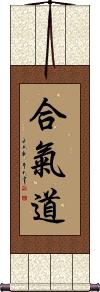
Hapkido or 合氣道 is a mostly-defensive martial art in Korea.
Hapkido has some connection to the Aikido of Japan. They are written with the same characters in both languages. However, it should be noted that the Korean Hanja characters shown here are the traditional Chinese form - but in modern Japan, the middle character was slightly simplified.
Note: You can consider this to be the older Japanese written form of Aikido. Titles on older books and signs about Aikido use this form.
The connection between Japanese Aikido and Korean Hapkido is muddled in history. The issue is probably due to the difficult relationship between the two countries around WWII. Many Koreans became virtual slaves to the Japanese during that period. After WWII, many things in Korea were disassociated from having any Japanese origin. The relationship has greatly mellowed out now.
Looking at the characters, the first means “union” or “harmony.”
The second character means “universal energy” or “spirit.”
The third means “way” or “method.”
One way to translate this into English is the “Harmonizing Energy Method.” This makes sense, as Hapkido has more to do with redirecting energy than fighting strength against strength.
More Hapkido info
More notes:
1. Sometimes Hapkido is Romanized as “hap ki do,” “hapki-do” “hab gi do” or “hapgido.”
2. Korean Hanja characters are actually Chinese characters that usually hold the same meaning in both languages. There was a time when these characters were the standard and only written form of Korean. The development of modern Korean Hangul characters is a somewhat recent event in the greater scope of history. There was a time when Chinese characters were the written form of many languages in places known in modern times as North Korea, South Korea, Japan, Vietnam, Singapore, Hong Kong, Taiwan, Mainland China, and a significant portion of Malaysia. Even today, more people in the world can read Chinese characters than English.
3. While these Korean Hanja characters can be pronounced in Chinese, this word is not well-known in China and is not considered part of the Chinese lexicon.
Fatal error: Cannot redeclare function foreignPrice() (previously declared in /home/gwest/web/chinesescrollpainting.com/public_html/includes/currencyconverter.php:22) in /home/gwest/web/orientaloutpost.com/public_html/includes/currencyconverter.php on line 22