Many custom options...


And formats...



Phoenix Rise From the Ashes in Chinese / Japanese...
Buy a Phoenix Rise From the Ashes calligraphy wall scroll here!
Personalize your custom “Phoenix Rise From the Ashes” project by clicking the button next to your favorite “Phoenix Rise From the Ashes” title below...
1. Phoenix Rise from the Ashes
3. Phoenix
4. Overcome / Surpass / Rise Above
5. Phoenix
6. Rise Up with Thrift and Diligence
7. Phoenix
8. Rise and Fall / Ups and Downs
9. Dragon and Phoenix Brings Luck
12. Empress
14. Ash
16. Failure is a Stepping Stone to Success
17. Ascend
18. Flying / Flight / Rising Upward
Phoenix Rise from the Ashes
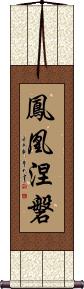
鳳凰涅磐 is a proverb that suggests “Legendary Phoenix rises from the ashes.” It means “Legendary Phoenix [reaches] Nirvana.”
There is a legend in China of a great bird reborn once every 500 years. This bird gathers all the ill will, suffering, desire, and other negative things of the world. The bird then plunges into the fire to burn away all negative things, sacrificing itself in the process (achieving Nirvana, or perhaps allowing others the opportunity to reach Nirvana).
500 years later, the phoenix is reborn from the ashes again, and the cycle repeats.
Legendary Phoenix
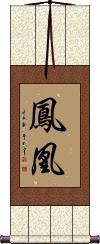
鳳凰 is the word that translates as “Legendary Phoenix” in Chinese.
This refers to the bird that, according to Chinese folklore, rose from the fiery ashes.
The phoenix and dragon are by far the most famous creatures in Chinese mythology.
Phoenix
Transliterated Name
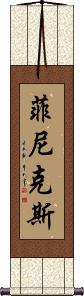
菲尼克斯 is the transliteration to Mandarin Chinese for the name Phoenix.
It sounds like Phoenix but does not mean Phoenix.
You may want to carefully consider choosing a scroll that means Phoenix instead if this is your given name.
Overcome / Surpass / Rise Above
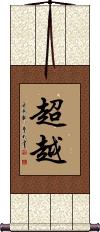
In Chinese, Japanese Kanji, and old Korean Hanja, 超越 means to overcome, surpass, transcendence, excel, exceed, go beyond, rise above, or transcend.
Phoenix (male)
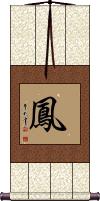
鳳 is the simplest way to write “Phoenix” in Chinese. Because the dragon is usually expressed as a single character, when you see “dragon and phoenix” written in Chinese, you'll often see this single-character version.
Please note, this is also the male element of a phoenix, so it also means “male phoenix bird.” However, some Chinese people may argue that the phoenix has a female characteristic, regardless of which character you use.
Rise Up with Thrift and Diligence
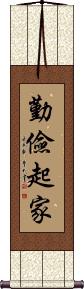
勤儉起家 is a Chinese proverb that suggests you begin to rise up by thrift and hard work.
Diligent work and spending money wisely will almost always pay off.
Phoenix (female)
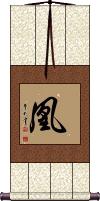
凰 is another simple way to write “Phoenix” in Chinese. 凰 is the specifically female element of a phoenix, so this is how you write “female phoenix.” 凰 is sometimes used to represent the female empress (many times in history, China was ruled by a woman, in much the same way queens came to power in Europe).
Note that the emperor is always represented as a dragon (not the male version of a phoenix).
If you see yourself as a strong woman, this might be a calligraphy scroll for you to express “woman power” or “powerful woman” in a cool way.
Rise and Fall / Ups and Downs
Eiko-Seisui
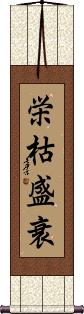
This Japanese proverb can be translated as “flourish and wither, prosper and perish,” “life is full of fortune and misfortune,” or simply “vicissitudes of life.”
栄枯盛衰 / 榮枯盛衰 is about the rise and fall of human affairs or the ups and downs of life. Prosperity comes and goes, everything is fleeting and temporary, but like waves, another swell of prosperity may come.
Here's how the Kanji break down in this proverb:
栄 = prosper; thrive; flourish; boom.
枯 = wither; die.
盛 = prosperous; flourishing; thriving; successful; energetic; vigorous; enthusiastic.
衰 = become weaker; decline; get weak; die down; subside; abate; fail.
 Notes: The original version of the first character looks like the image to the right. In modern Japan, they simplified that Kanji a bit into the version shown above. If you have a preference for which style is used for your calligraphy, please let me know when you place your order.
Apparently, with that original version of the first character, this is also used in Korean Hanja. However, I have not confirmed that
it’s
used in the same way or is widely-known in Korean.
Dragon and Phoenix Brings Luck
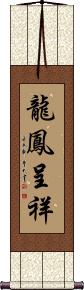
龍鳳呈祥 is often seen at weddings and other celebrations in China.
It suggests that the dragon and phoenix will bring you auspicious tidings.
The first character is a dragon.
The second is a phoenix.
The third is presents or brings.
And the last means auspicious, propitious, or luck.
Throughout China, the dragon and phoenix are symbols of good fortune. You will see these auspicious figures as decorative symbols on everything from buildings, furniture, wedding costumes, and sculptures in public parks to caskets and items used in ceremonies.
Dragon and Phoenix
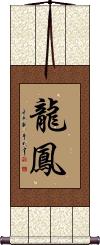
龍鳳 is the simplest way to express “Dragon and Phoenix” in Chinese and Japanese.
This title can be used to represent, “The emperor and empress,” or a metaphor for an outstanding personage.
It should be noted that this is most often used as a given name, “Ryuuhou” in Japanese. It may be read more as a name than by meaning in Japanese.
Dragon / Emperor Symbol
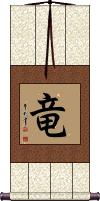
竜 is an alternate form of the dragon.
Still pronounced the same in Chinese, Japanese, and Korean.
This particular Kanji is often associated as an imperial symbol as well as representing the mythical Asian dragon. You may have seen it on the chest or flag of the emperor in old Japanese and Chinese movies.
Note: I would rate this as a non-universal alternate form. The other dragon character is by far more common, and universally understood.
We strongly recommend  if you are looking for the symbol of dragon.
Empress
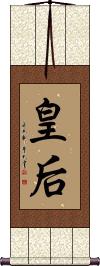
皇后 is the title of empress/emperess, the female form of the emperor.
皇后 is used in Chinese, Japanese Kanji, and old Korean Hanja.
While the emperor's reign was for life, if he died, his wife would hold his power. In this case, a woman was the ultimate ruler of the greater part of East Asia (now China) until her death and the succession of the emperor's firstborn son to lead the empire. Numerous times in various Chinese dynasties, an empress took power in this way.
The first character means emperor by itself.
The second character alone can mean “wife of an emperor or king” (the first character clarifies that we are talking about an empress and not a queen). It can also mean sovereign or last offspring, depending on context.
Note: In some books, this word is translated as queen. While only incorrect if you get technical (because an empress is theoretically a higher level than a queen), the meaning is very similar.
皇后 is sometimes used for the title of queen, but more technically, this is the wife of the emperor (a higher level than a queen).
Feng Huang Nie Pan
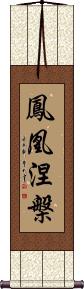
鳳凰涅槃 means Phoenix Nirvana in Chinese and is the title of a famous book.
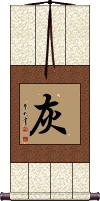
灰 is the Chinese, Japanese, and Korean word for ash or ashes.
This can also refer to dust, lime, or gray. When speaking of emotions in Chinese, it can refer to being discouraged or dejected.
In Japanese, this can be the surname, Hai.
Tomorrow / The Next Sun
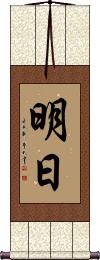
明日 is a common way to say “tomorrow” in Chinese and Japanese Kanji.
This temporal noun literally means “next sun[rise].” In addition to “tomorrow,” it can also mean “near future.”
In Japanese, this can also be the female given name Meibi.
Failure is a Stepping Stone to Success
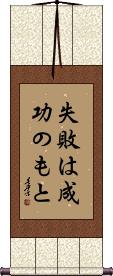
This Japanese proverb literally reads, “failures/mistakes/blunders are the yeast-starter/yeast-mash of success.”
Basically, it suggests that failures are a necessary part of success; Just as bread or beer requires yeast to successfully rise or brew/ferment.
Note: Because this selection contains some special Japanese Hiragana characters, it should be written by a Japanese calligrapher.
Ascend
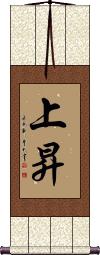
上昇 means to rise up, to go up, or to ascend in Chinese, Japanese Kanji, and old Korean Hanja.
If you are rising, ascending, or climbing, this is the word for you.
In the older Buddhist context, this means to ascend, with the implication that the destination is the heavenly realm.
Flying / Flight / Rising Upward
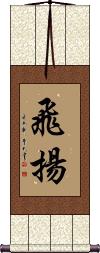
飛揚 means flight, flying, or to rise upwards in Chinese and Japanese Kanji.
飛揚 is not the most common title for a wall scroll but if you have a personal reason or this idea is important to you, then go for it.
This can also be the personal name “Hiyou” in Japanese.
Bounce Back / Stage a Comeback
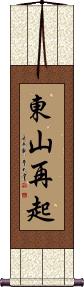
東山再起 is a Chinese proverb that means “make a comeback” or “resuming after a failure.”
It's sometimes used in terms of losing a job and then getting it back. However, it applies to any kind of comeback after difficulty.
The literal meaning of this Chinese idiom is, “[The] Eastern Mountain Again [will] Rise.”
Fall Down Seven Times, Get Up Eight
Always rising after a fall or repeated failures
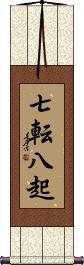
七転八起 is a Japanese proverb that relays the vicissitudes of life, with the meaning “seven times down eight times up.”
Some would more naturally translate it into English as “Always rising after a fall or repeated failures” or compare it to the English, “If at first, you don't succeed, try, try again.”
The first Kanji is literally “7.” The second means “fall down” (sometimes this Kanji means “turn around,” “revolve” or “turn over” but in this case, it holds the meaning of “fall”). The third is “8.” And the last is “get up,” “rouse,” or “rise.”
Basically, if you fail 7 times, you should recover from those events and be prepared to rise an 8th time. This also applies if it is the world or circumstances that knock you down seven times...
...just remember that you have the ability to bounce back from any kind of adversity.
Note: This can be pronounced in two ways. One is “shichi ten hakki” or “shichitenhakki.” The other is “nana korobi ya oki” also written, “nanakorobi-yaoki.”
Special Note: The second character is a Kanji that is not used in China. Therefore, please select a Japanese calligrapher for this title.
Fatal error: Cannot redeclare foreignPrice() (previously declared in /home/gwest/web/chinesescrollpainting.com/public_html/includes/currencyconverter.php:22) in /home/gwest/web/orientaloutpost.com/public_html/includes/currencyconverter.php on line 22