Many custom options...


And formats...



Shaolin Martial Arts in Chinese / Japanese...
Buy a Shaolin Martial Arts calligraphy wall scroll here!
Personalize your custom “Shaolin Martial Arts” project by clicking the button next to your favorite “Shaolin Martial Arts” title below...
See also: Martial Arts Words and Phrases
3. Shaolin Chan
4. Shaolin Chuan / Shao Lin Quan
6. Shorin-Ryu
7. Wudang Fist
10. Matsubayashi-Ryu Karate-Do
11. Kenpo / Kempo / Quan Fa / Chuan Fa
14. Ken Zen Ichi Nyo
Shaolin Martial Arts
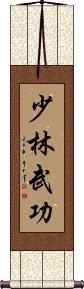
少林武功 is the title for “Shaolin Wu Gong” or “Shaolin martial arts.”
Shorinji Kempo / Kenpo
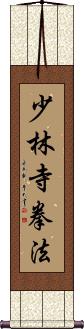
少林寺拳法 is a specific type of martial art in Japan that claims origins in the Kung Fu practiced in the original Shaolin Monastery of China.
The first three characters mean “Shaolin Monastery,” and you might notice the Japanese is pronounced in a very similar way. The reason is, many words were “borrowed” from the original Chinese when Japan did not have a written language and simply absorbed Chinese characters into their language around the 5th century. When a Japanese word did not exist, the Chinese pronunciation was often absorbed as well as the written form.
The last two characters mean “fist law” or “method of the fist.” It has long been argued as to whether the Japanese for these characters should be Romanized as “kempo” or “kenpo.” The official method should be “kenpou” but it's common to drop the “u” that comes after the “o.”
I imagine if you are looking for this title, you already know what it means, so the above is simply extra information that a student of Shorinji Kempo might want to know.
Shaolin Chan
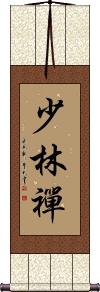
少林禪 translates as “Little Forest Meditation.”
少林禪 is part of a movement to provide spiritual and mental health by integrating the practices of martial arts and meditation.
More information at Shaolin Chan Foundation.
Shaolin Chuan / Shao Lin Quan
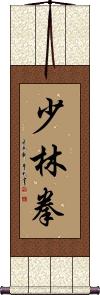
少林拳 is the title of the martial art (style of Kung Fu) that is taught to the monks and students in the Shaolin Buddhist Monastery.
The addition of Chuan or Quan, which means fist is what signifies that you are talking about this school or form of martial arts.
Changquan / Long Fist
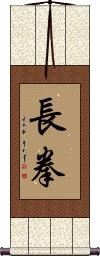
長拳 is the title for Changquan or Chang Quan, meaning Long Fist.
This style comes from the 北少林 (Northern Shaolin). Changquan belongs to the Northern Chinese School of Martial Arts.
Shorin-Ryu
Shaolin Style
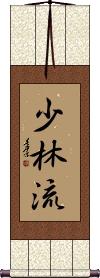
少林流 is the Japanese martial arts title “Shorin-ryu.”
Though the first part of the title comes from the Shaolin (small forest) monks of China.
In Japan, this refers to the Okinawa School of Karate.
 Note that often in Japanese, the first Kanji of this title was changed to the version shown to the right. If you prefer this version, please click on the Kanji to the right instead of the button above.
Wudang Fist
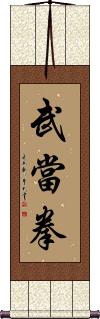
武當拳 means Wudang Quan or Wudang Fist.
Wudang (sometimes romanized as Wutang or Wu Tang) refers to a Mountain range in northwest Hubei. The Wudang martial arts style refers to a version of Shaolin Kung Fu.
Shobayashi Shorin-Ryu

小林少林流 is the title Shobayashi Shorin-Ryu in Japanese Kanji.
Shōbayashi Shōrin-Ryū is of real Okinawan karate lineage, but the romanization causes confusion.
小林 = Shōbayashi (can also be read Kobayashi)
少林流 = Shōrin-Ryū (Shaolin style) which means “Small-forest Shaolin School.”
This reflects the lineage that uses 小林 (small forest) instead of 松林 (pine forest) or 少林 (Shaolin) as the branch identifier of the Okinawan martial arts style.
You should use this, 小林流 (Shōbayashi/Kobayashi-Ryū) or “Small-forest style” for the Chibana lineage.
You should use 松林流 (Matsubayashi-Ryū) or “Pine-forest style” for the Nagamine lineage.
Shorin Ji Ryu
Shaolin Temple Style
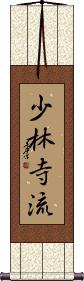
少林寺流 is the Japanese martial arts title “Shorin-ji-ryu.”
Though the first part of the title comes from the Shaolin temple in China. In Japan, this refers to an Okinawa school of karate.
Note: Sometimes, this title is written without the “ji” or “temple” Kanji.
Matsubayashi-Ryu Karate-Do
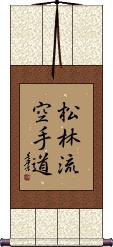
鬆林流空手道 is the Japanese title for the Matsubayashi-Ryu Karate-Do school of martial arts.
If directly translated, it means “Pine Forest Style Empty Hand Way.”
Notes:
1. 松林流 can be pronounced Matsubayashi-Ryū or Shōrin-Ryū. This can be confusing as Shōrin can also represent 少林 which refers to the Shaolin (little forest) style.
2. 松 can also be written in the traditional form of 鬆.
Kenpo / Kempo / Quan Fa / Chuan Fa
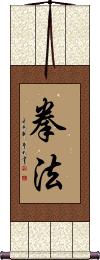
拳法 is a form of martial arts that can be translated in several ways.
Some will call it “fist principles,” “the way of the fist,” or even “law of the fist.” The first character literally means fist. The second can mean law, method, way, principle, or Buddhist teaching.
Kempo is really a potluck of martial arts. Often a combination of Chinese martial arts such as Shaolin Kung Fu with Japanese martial arts such as Karate, Jujutsu (Jujitsu), Aikido, and others. You may see the term “Kempo Karate,” which basically means Karate with other disciplines added. In this way, Kempo becomes an adjective rather than a title or school of martial arts.
These facts will long be argued by various masters and students of Kempo. Even the argument as to whether it should be spelled “kenpo” or “Kempo” ensues at dojos around the world (the correct Romaji should actually be “kenpou” if you precisely follow the rules).
The benefit of Kempo is that the techniques are easier to learn and master than pure Kung Fu (wu shu). Students are often taught basic Karate moves, kicks, and punches before augmenting the basic skills with complex Kung Fu techniques. This allows students of Kempo to achieve a level where they can defend themselves or fight in a relatively short amount of time (a few years rather than a decade or more).
Because the definition of this word is so fluid, I should make some notes here:
1. Purists in Okinawa will claim that “Okinawa Kenpo” or “Ryukyu Hon Kenpo” is the original and true version of this martial art from the old kingdom. It is actually little or no connection between Okinawa Kenpo and the way the word is used elsewhere.
2. In Chinese, where these characters are pronounced “quan fa” (sometimes Romanized as “chuan fa” because the Chinese-pinyin “q” actually sounds like an English “ch” sound), these characters do not hold the connotation of being a mixed martial art. It is simply defined as “the law of the fist.”
3. My Japanese dictionary oddly defines Kenpo as the “Chinese art of self-defense.” I personally don't feel this is the most common way that people perceive the word but just something you should know.
Kung Fu / Gong Fu
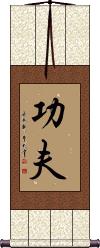
功夫 or Kung Fu is one of the most famous types of martial arts in the world - and not just because of Bruce Lee.
Some translate the meaning as “Accomplishment by Great Effort.” I think this is partially true, but directly translated, it literally means “Merit/Achievement/Accomplishment Man.” The word “fu” can sometimes mean “husband” or “porter,” but in this case, it can only mean “man.” However, few in China will think “man” when they hear the word “Gong Fu” spoken.
This term is also used for things other than martial arts. In fact, it's used to refer to a person with excellent skills in crafts that require a lot of effort to master, such as cooking, tea ceremonies, and calligraphy.
What a lot of people don't know is that the spelling of “Kung Fu” was actually taken from the old Wade Giles form of Romanization. Using this method, the sounds of the English “G” and “K” were both written as “K” and an apostrophe after the “K” told you it was supposed to sound like a “G.” Nobody in the west knew this rule, so most people pronounce it with a “K-sound.” And so, Gong Fu will always be Kung Fu for most westerners.
Also, just to educate you a little more, the “O” in “Gong” has a sound like the English word “oh.”
The popular Chinese dish “Kung Pao Chicken” suffers from the same problem. It should actually be “Gong Bao Chicken.”
Historical note: Many will claim that Kung Fu was invented by the monks of the Shaolin monastery. This fact is argued in both directions by scholars of Chinese history. Perhaps it is more accurate to say that the Shaolin Monks brought the original fame to Kung Fu many generations ago.
Japanese note: While most Japanese martial artists will recognize these characters, Katakana is more often used to approximate the pronunciation of "Kung Fu" with "カンフー." Some will argue as to whether this should be considered a Japanese word at all.
See Also: Bruce Lee
Matsumura Shorin-Ryu
Matsumura Sōkon's Shaolin Style
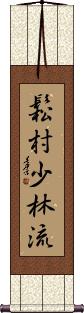
松村少林流 is the Japanese martial arts title “Matsumura Shorin-ryu.”
Ken Zen Ichi Nyo
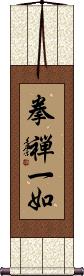
拳禪一如 is a Japanese phrase that is often translated as “train both body and spirit.”
Here's the breakdown of the words in this phrase:
拳 means fist.
禅 is zen, which means meditation.
一如 is a word that means “to be just like,” “oneness,” “true nature,” or “true character.”
So to get to the translation of “train both body and spirit,” you must understand that “fist” is representing “body” and the idea of meditation is representing “mind.”
I have to say, this is not how I would translate this. To me, it's really about training with your mind and remembering that meditation is a huge part of training, not just your fist. As the Shaolin Buddhist monks show us, meditation is just as important as physical training in martial arts.
Fatal error: Cannot redeclare foreignPrice() (previously declared in /home/gwest/web/chinesescrollpainting.com/public_html/includes/currencyconverter.php:22) in /home/gwest/web/orientaloutpost.com/public_html/includes/currencyconverter.php on line 22