Many custom options...


And formats...



Warrior of God Soldier of God in Chinese / Japanese...
Buy a Warrior of God Soldier of God calligraphy wall scroll here!
Personalize your custom “Warrior of God Soldier of God” project by clicking the button next to your favorite “Warrior of God Soldier of God” title below...
See also: Bushido - Code of the Samurai Warrior
2. Marine / Soldier of the Sea
4. Warrior Monk / Soldier Priest
7. Warrior Soul / Heroic Spirit
9. Warrior Soul / Spirit of a Fighter
10. Warrior of God / Soldier of God
11. Fighter for God
12. Soldiers
13. Warrior
14. Peaceful Warrior
17. Knight
20. Fighting Spirit
21. Fighter
22. Avenger
23. Sword
24. Fighting Spirit
Ghost Warrior
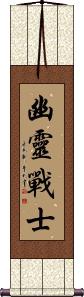
幽靈戰士 means Ghost Warrior or Ghost Soldier in Chinese.
This title is used for at least one movie and a video game (about a sniper).
Marine / Soldier of the Sea
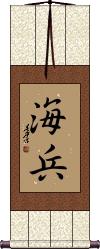
海兵 is a way to express “Marine” as in an individual “Soldier of the Sea” in Japanese Kanji and old Korean Hanja characters (not to be confused with Korean Hangul).
Breaking down each character, this means:
“ocean/sea soldier/army/warrior.”
Please note that this Japanese/Korean version kind of means “sailor” or “navy” in Chinese.
See Also: Military
Soldier of the Gods
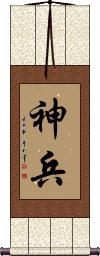
神兵 is a Japanese, Chinese, and Korean title that means “soldier dispatched by a god,” or “soldier under the protection of the gods.”
神兵 is used more in Japanese (especially in animation) than the other languages.
Warrior Monk / Soldier Priest
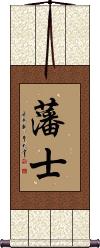
藩士 is a strange title for a wall scroll, but it may suit you if you see yourself as a warrior monk.
This title is not commonly used but will be understood in Chinese and Japanese. It can also be read as “armed monks.”
Quiet Warrior
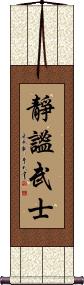
靜謐武士 means “Quiet Warrior” in Chinese.
靜謐 means quiet or tranquil.
武士 means warrior or soldier.
See Also: Peaceful Warrior
Warrior / Fighter
Senshi
Warrior Soul / Heroic Spirit
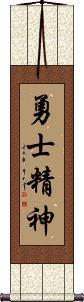
勇士精神 can be translated as the warrior's spirit or warrior's soul. The first two characters can be translated as “warrior” or literally “brave soldier/man,” although some will translate this word as “hero.” Therefore, this is also how to say “heroic spirit.”
The second two characters mean vigor, vitality, drive, spirit, mind, heart, mental essence, and psychological component. Basically “your soul.”
We have two versions of this phrase. The only difference is the first two and last two characters are swapped. The version here suggests that you admire or like the idea of the spirit of a warrior. The other version suggests that you are the warrior or hero.
Soul of a Warrior
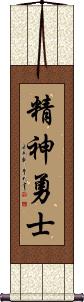
精神勇士 can be translated as the spirit or soul of a warrior. The first two characters can be translated as vigor, vitality, drive, spirit, mind, heart, mental essence, and psychological component. Basically, “your soul.”
The second two characters mean “warrior” or literally “brave soldier/man,” although some will translate this word as “hero.” Therefore, this is also how to say “soul of a hero.”
Note: This title is best for Chinese and old Korean. It does make sense in Japanese but is not a common or natural Kanji combination in Japanese.
We have two versions of this phrase. The only difference is the first two and last two characters are swapped. The version here suggests that you are the warrior or hero. The other version suggests that you admire or like the idea of the spirit of a warrior.
Warrior Soul / Spirit of a Fighter
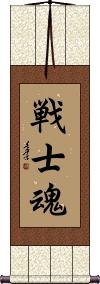
戦士魂 is “warrior soul” or “warrior spirit” in Japanese.
Here's the breakdown of the Kanji:
戦士 (senshi) warrior; soldier; combatant; fighter.
魂 (damashii/tamashii) soul; spirit; can sometimes mean “ghost.”
Warrior of God / Soldier of God
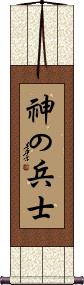
神の兵士 means “Warrior of God” or “Soldier of God” in Japanese.
Fighter for God
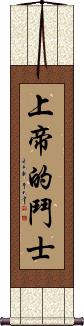
上帝的鬥士 means “God's Fighter.”
While a lot of people search for “Warrior of God,” or “Soldier of God,” this is actually the most natural way to say something like this in Chinese.
Soldiers
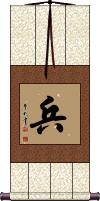
兵 can be used to express soldiers, troops, a force, an army, weapons, arms, military, warfare, tactics, strategy, or warlike.
The final meaning depends on context. It's also part of the Chinese title for the Terracotta soldiers. In fact, this character is usually used in compound words (words of more than one character). Sometimes this single character is the title used for the pawns in a chess game (in a related issue, this is also a nickname for soldiers with the rank of Private).
Warrior
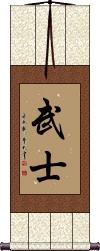
The first character, 武, is the spirit or essence of a warrior. The second character, 士, means soldier, officer, or official. 武士 is also used appropriately enough to describe a piece of a chess game. 武士 can also be translated as a soldier, cavalier, palace guard, or samurai, and sometimes as a knight. I've occasionally seen this translated as strong man or tough man (gender not necessarily implied).
By far, 武士 is the most common way to write warrior in Chinese characters, Japanese Kanji, and old Korean Hanja.
Note: In Japanese, this is Bushi, as in Bushido.
Peaceful Warrior
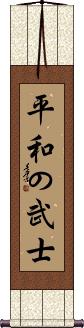
平和の武士 can be read as “Peaceful Warrior” or “Warrior for Peace” in Japanese. This sounds like an oxymoron in Japanese, so it's a weird title. Expect Japanese people to be perplexed when they see it.
Character breakdown:
平和 (heiwa) peace; harmony.
の (no) possessive particle.
武士 (bushi) warrior; samurai; soldier.
Enlightened Warrior
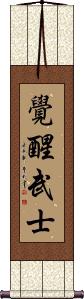
覺醒武士 is not a commonly used title in Chinese but is sometimes used in Martial arts and military contexts to refer to a warrior who seems always to be fully aware, enlightened, knowledgeable, noble, and just.
The first two characters are a word that means: to awaken; to come to realize; awakened to the truth; the truth dawns upon one; scales fall from the eyes; to become aware.
The last two characters mean warrior but can also refer to a samurai, soldier, or fighter.
Spiritual Warrior
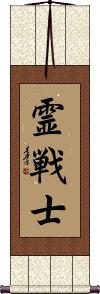
霊戦士 is a Japanese title that means “Spiritual Warrior.”
The first Kanji means spiritual.
The second Kanji means war, warfare, or battle.
The third Kanji means soldier, officer, man or pawn.
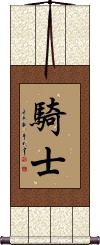
Knight
Death Before Dishonor
A soldier can die or kill, but never dishonor or disgrace himself
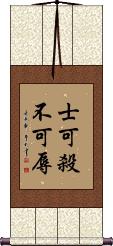
士可殺不可辱 almost directly matches the military idea of “Death Before Dishonor,” while also being an ancient Chinese proverb.
The direct meaning is, “[A] soldier/warrior can die/kill [but he/she] cannot [allow] dishonor/disgrace [upon himself/herself].” Chinese grammar, and especially ancient grammar, is a little different than English. Not nearly as many articles are needed, and a lot is implied.
There are a lot of ways to express ideas similar to “Death Before Dishonor” in Chinese, and I would rate this one in the top two.
This is the original form of this proverb with the character for “soldier/warrior” at the beginning. Most of the time, this character is dropped, becoming a five-character proverb (the soldier/warrior part is implied, even without the character being present in the proverb). We also offer a shorter version.
Warriors of Light
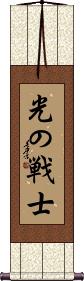
光の戦士 is the Japanese title for Warrior(s) of Light.
This usually refers to the Four Warriors of Light theme from the Final Fantasy series.
Also called Light Warriors, Warriors of the Light, Knights of Light, or Heroes of Light, depending on who is translating.
There are no direct plural forms in Japanese, so warrior or warriors is the same word, 戦士 (which can also be soldier, fighter, combatant, etc.).
Fighting Spirit
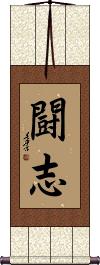
This literally means “fighting spirit” or “the will to fight.”
As in the spirit that a warrior, soldier, athlete, or fighter must possess.
Fighter
Warrior / Soldier
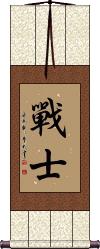
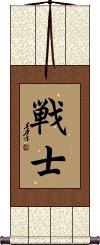
戰士 is how to write “fighter” in Chinese, ancient Japanese Kanji, and old Korean Hanja.
The first character means war, warfare, or battle.
The second character means soldier, officer, man, or pawn.
戰士 can also mean soldier or warrior. Usually this will be read as “fighter” or “one who fights.” 戰士 is an odd selection for a wall scroll unless you are a boxer, ultimate fighter, or otherwise participate in combat sports.
Other translations include combatant or champion.
 Note that after WWII, the first Kanji was reformed/simplified. This modern Japanese version is shown to the right. If you want this version, click on the Kanji to the right, instead of the button above.
Avenger
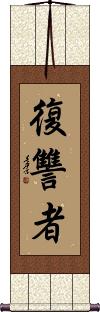
復讐者 is a Japanese Kanji title that means avenger or revenger.
The first two characters literally mean revenge or avenge.
The last character is a way to say a person (or soldier/warrior).
Altogether, you have something like, an “avenging person,” hence avenger.
Sword
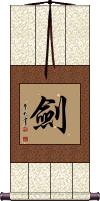
劍 is pronounced “jian” in Chinese. When you say it, imagine that you are making the sound of a sword as it clashes with a metal shield. This might get you closer to the correct pronunciation in Chinese.
I actually wonder if this word came from the metallic ringing sounds of a sword in battle - but such knowledge is lost in history.
The sword is a symbol of a warrior. The one thing that a soldier in ancient China lived and died by. A warrior with his skills and sword proves himself of great value. A warrior who losses his sword instantly becomes worthless.
劍 is an excellent scroll for someone in the military (especially officers of all services - as well as enlisted NCO Marines since they still carry swords even if mainly for ceremonial purposes). Or perhaps someone who practices variations of kung fu or tai chi that involve weapons.
Please note that while this character is understood with the sword meaning in Japanese, you might be looking for the word “katana” which also means sword in Japanese but means “knife” in Chinese.
There are other ways to write sword, and here are a few...


If you are particular about the version you receive, please let me know when you place your order (Note: Special styles are only available from one of our master calligraphers).
Fighting Spirit
The Will to Fight
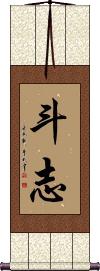
斗志 literally means fighting spirit in Chinese.
As in the spirit that a warrior, soldier, athlete, or fighter must possess.
 Note: There is more than one way to write the first character of this word. It is sometimes written like the version shown to the right (yes, it's completely different but has the same meaning & pronunciation). If you have a preference, please let us know in the special instructions about your order.
I've noticed you are searching for "Warrior of God Soldier of God". If you are interested, I can have your favorite verse from the Torah or Bible translated into Chinese and written on a wall scroll for you. Please contact me siting the verse or verses you want. Here is an example: Joshua 24:15.
If you are looking for a Jewish or Christian title, phrase, or word, I have a great selection here: Christian Words in Chinese
Fatal error: Cannot redeclare foreignPrice() (previously declared in /home/gwest/web/chinesescrollpainting.com/public_html/includes/currencyconverter.php:22) in /home/gwest/web/orientaloutpost.com/public_html/includes/currencyconverter.php on line 22