Many custom options...


And formats...



Zen Heart Zen Mind in Chinese / Japanese...
Buy a Zen Heart Zen Mind calligraphy wall scroll here!
Personalize your custom “Zen Heart Zen Mind” project by clicking the button next to your favorite “Zen Heart Zen Mind” title below...
3. Good Heart
9. Peaceful Heart / Peace of Mind / Calm Mind
10. One Heart / One Mind / Heart and Soul
11. Whole Heart
12. Inner Peace
13. Immovable Mind
14. Heart and Soul
15. Merciful Heart / The Light from a Buddha Mind
16. Heart and Soul
18. Sincere Heart
19. Prideful Mind / Self-Respecting Heart
20. Bodhicitta: Enlightened Mind
21. Confidence / Faithful Heart
22. No Mind / Mushin
23. Beautiful Heart / Beautiful Spirit
24. Mind Like Water
25. Buddha Heart / Mind of Buddha
26. Determination
28. Beautiful Heart / Beautiful Mind
29. Hall of the Heart / Sacred Heart
30. Spirit
31. Listen to Your Heart / Follow Your Heart
33. The Bodhi Mind
34. Respectful Heart
35. Body Mind Spirit
36. Seeking Mind
37. Peaceful Heart
38. Purity of Mind
39. You are Always in My Heart
40. To a Willing Heart, All Things Are Possible
42. With all the strength of your heart
44. Heijoshin / Presence of Mind
45. Iron Heart
47. Thinking Heart
48. Peace of Mind
49. Brave Heart
50. Tao / Dao of the Heart / Soul
52. Spiritual Strength / Strength of Spirit
53. Devotion / Dedication / Attentive / Focused
55. Strong-Willed / Strong of Heart
56. Independent Spirit / Independent Heart
57. Inner Light / Intelligence
58. Kemo no Shin
60. Shoshin-Ryu
61. Shinyo-Kai
62. Bushindo
63. Shoshin-Ryu
64. The Spirit of Dragon and Tiger
66. Remember
68. No Worries
69. Keiko Shin
70. Omoi / Desire
71. Free Spirit
72. Warrior Within
73. Inner Freedom
75. Free Spirit
76. Reiki Precepts by Usui Mikao
77. Warrior Soul / Heroic Spirit
78. Purified Spirit / Enlightened Attitude
79. Seishin Budo
81. My True Love
Heart / Mind / Spirit
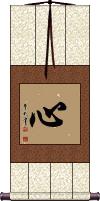
心 would often be translated as “heart.”
However, because it was believed in Chinese culture for thousands of years that your consciousness and thoughts came from the big red organ in the middle of your chest, it also means “mind” or “spirit” and sometimes even “soul.”
In Korean, beyond heart, mind, and spirit, this character can mean moral, nature, mind, affections, intentions, core, and center. In fact, it is used in Chinese to mean “center” as well but only with another character in front of it. For instance, “medical center” or even “shopping center.” Separately and alone, it will not be read with that “center” meaning unless thought of as “the center of your soul.”
Morality of Mind
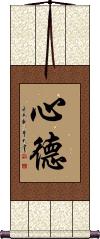
The idea of 心德 or “morality of mind” goes along with 行德 or “wu de” (martial morality or virtues of the warrior).
Here, the first character is a representation of your heart or mind.
The second character refers to morality or virtue.
This can also be translated as “morality of heart,” “virtue of heart,” or “virtue of the mind.”
Since ancient times in Asia, the idea of your mind (where your soul resides and your thought originates) has been associated with the heart. Just as in western culture, where we say “it comes from the heart” or “heartfelt emotions,” there is a belief that your heart and mind are one and the same (medical science now begs to differ).
See Also: Morality of Deed | Martial Morality
Good Heart
A heart of kindness, benevolence, and virtuous intentions
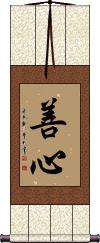
善心 literally reads “Good Heart” but is used to refer to the ideas of kindness, benevolence, philanthropy, virtuous intentions, moral sense, and conscience.
Some will also translate this as the morality of mind (as the character for the heart is often used to mean mind).
In Japanese, this can be the given name Yoshinaka.
Mind Body Spirit
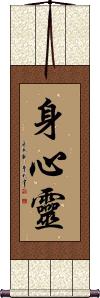
身心靈 is probably the best way to express the idea of “Body, Mind, and Spirit” in Chinese and old Korean Hanja. We are actually using the word “heart” here because, for thousands of years, the heart was thought to be the place where your thoughts, feelings, and emotions came from. We do something similar in the west when we say “warm-hearted” or “I love you with all of my heart.” In this context, heart = mind in Asian language and culture.
The very literal translation of these three characters is “body, heart & spirit,” which could also be interpreted as “body, mind & soul.”
We have arranged these characters in this order because it simply “feels” like the proper order in the Chinese language. Word lists like this are not so common for calligraphy artwork, so we must be careful to put them in the most natural order. It should be noted that this is not a common title in Asia, nor is it considered an actual phrase (as it lacks a clear subject, verb, and object).
 In Japanese Kanji, they use an alternate form of the character for soul or spirit. If you want this using the Japanese alternate, please click on the Kanji shown to the right instead of the button above.
Japanese disclaimer: This is not a natural phrase/list in Japanese. While not totally-natural in Chinese, this word list is best if your audience is Chinese.
Lingering Mind
Zanshin
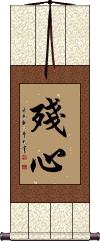
First off, 殘心 should only be used in the context of Japanese martial arts. In Chinese, it's a rather sad title (like a broken heart). In Chinese, the first character alone means destroyed, spoiled, ruined, injured, cruel, oppressive, savage, incomplete, or disabled. However, in Japanese, it's remainder, leftover, balance, or lingering.
The second character means heart, mind, soul, or essence in both languages.
殘心 is one of the five spirits of the warrior (budo) and is often used as a Japanese martial arts tenet. Under that context, places such as the Budo Dojo define it this way: The spirit of zanshin is the state of the remaining or lingering spirit. It is often described as a sustained and heightened state of awareness and mental follow-through. However, true zanshin is a state of focus or concentration before, during, and after the execution of a technique, where a link or connection between uke and nage is preserved. Zanshin is the state of mind that allows us to stay spiritually connected, not only to a single attacker but to multiple attackers and even an entire context; a space, a time, an event.
 In modern Japan (and Simplified Chinese), they use a different version of the first character, as seen to the right. Click on this character to the right instead of the button above if you want this modern Japanese version of lingering mind / zanshin.
Mind of the Beginner
Shoshin
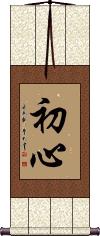
初心 is often translated in Japanese as “beginner's mind” or “beginner's spirit.”
In Chinese, the dictionary definition is “one's original intention.”
The first character means first, initial, primary, junior, beginning, or basic.
The second character means heart, mind, soul, or essence.
初心 is one of the five spirits of the warrior (budo) and is often used as a Japanese martial arts tenet. Under that context, places such as the Budo Dojo define it this way: The state of shoshin is that of a beginners mind. It is a state of awareness that always remains fully conscious, aware, and prepared to see things for the first time. The attitude of shoshin is essential to continued learning.
Forever In My Heart
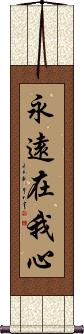
永遠在我心 means “forever in my heart” or “always in my heart” in Chinese.
This is the shorter, somewhat lyrical version of this phrase.
永遠 forever/eternal
在 at/in/exists
我 me/myself/my
心 heart/mind/soul
Forever In My Heart
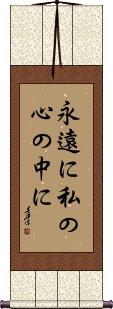
永遠に私の心の中に means “forever in my heart” or “always in my heart” in Japanese.
The character breakdown:
永遠 (eien) eternity; perpetuity; immortality; permanence.
に (ni) indicates the location of a person or thing.
私の (watashi no) my; mine.
心の中 (kokoro no naka) the middle of one's mind; the midst of one's heart.
に (ni) indicates the location of a person or thing (makes this “in” the middle of one's heart).
Note: There’s more than one way to say "Forever in My Heart" in Japanese, so you’ll find another version in our database. This is the very verbose version.
Note: Because this selection contains some special Japanese Hiragana characters, it should be written by a Japanese calligrapher.
Loving Heart / One’s Love
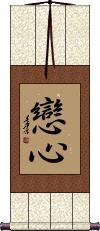
戀心 literally means “loving heart.” It can also be translated as “one's love” or “awakening of love.”
戀心 is used exclusively for love between boyfriends and girlfriends or husband and wife.
Breaking down the meaning of each Kanji, the first means love, affection, or tender passion. The second Kanji means heart, mind, or soul (most will read it as the heart).
See Also: Compassion | Love
Peaceful Heart / Peace of Mind / Calm Mind
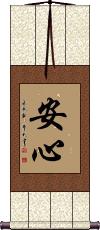
安心 can be defined as relief, peace of mind, feeling at ease, to be relieved, to set one's mind at rest, and easiness.
安心 is a nice word that encompasses great meanings within just two characters. Some of the other meanings include pacifying, settling the mind, and peace of mind. It's also the idea of feeling a sense of security, safety, and confidence in your state of well-being.
This can be used by everyone, but some consider it to be a Buddhist concept (You'll find it in your Zen dictionary).
Note: Can be romanized as Anshin or Anjin in Japanese.
One Heart / One Mind / Heart and Soul
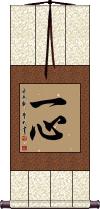
一心 literally reads as “one heart” in Chinese, Japanese Kanji, and old Korean Hanja.
Colloquially or figuratively, it means: wholeheartedly; heart and soul; of one mind; wholeheartedness; one's whole heart; with the whole mind or heart; one mind in heart.
I'm not kidding, all of those came right from the dictionary for this one title.
In Buddhism, this can refer to the bhūtatathatā, or the whole of things; the universe as one mind, or a spiritual unity.
In Japanese, this can be the female given name, Hitomi.
Whole Heart
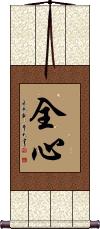
全心 is a short title that means “with heart and soul” or “one's whole heart.”
It literally reads “whole heart” or “complete mind.”
The first character means all, whole, entire, or complete.
The second character means heart but can also refer to the mind or soul.
Inner Peace
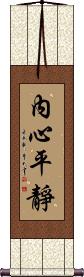
內心平靜 is a Chinese and Japanese phrase that is a direct translation of the western idea of inner peace.
The first two characters contain the idea of “heart,” “innermost being,” or “deep in the/your inner mind.”
The last two characters mean “tranquil” and “serene.”
I have seen this phrase used as “inner peace” for art prints and even on the side of coffee cups. But I think the translation is too literal. It feels like a direct translation from English rather than a nicely composed Chinese or Japanese phrase. See my other entries for “inner peace.”
See Also: Serenity | Simplicity | Peace
Immovable Mind
fudoshin
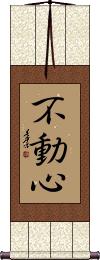
不動心 is one of the five spirits of the warrior (budo) and is often used as a Japanese martial arts tenet.
Under that context, places such as the Budo Dojo define it this way: An unshakable mind and an immovable spirit is the state of fudoshin. It is courage and stability displayed both mentally and physically. Rather than indicating rigidity and inflexibility, fudoshin describes a condition that is not easily upset by internal thoughts or external forces. It is capable of receiving a strong attack while retaining composure and balance. It receives and yields lightly, grounds to the earth, and reflects aggression back to the source.
Other translations of this title include imperturbability, steadfastness, keeping a cool head in an emergency, or keeping one's calm (during a fight).
The first two Kanji alone mean immobility, firmness, fixed, steadfastness, motionless, and idle.
The last Kanji means heart, mind, soul, or essence.
Together, these three Kanji create a title defined as “immovable mind” within the context of Japanese martial arts. However, in Chinese, it would mean “motionless heart,” and in Korean Hanja, “wafting heart” or “floating heart.”
Heart and Soul
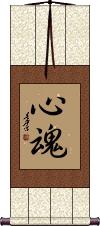
心魂 is “heart and soul” in Japanese Kanji.
The first character means heart (but can also mean mind or soul).
The last character means soul or spirit (spiritual essence).
Merciful Heart / The Light from a Buddha Mind
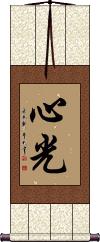
心光 can mean the light from a Buddha's mind or “merciful heart.”
This would especially be the light emanating from Amitābha.
Note that the character 心 can mean mind or heart. 光 means light or brightness - but in this context can suggest a glow of mercy or compassion.
This can also be a Japanese surname that is romanized as Shinkou or Shinko.
Heart and Soul
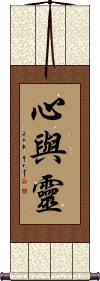
心與靈 is “heart and soul” in Chinese.
The first character means heart (but can also mean mind or soul).
The middle character is like the English “and.”
The last character means soul, spirit, or spiritual energy.
Always in My Heart
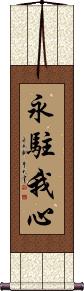
永駐我心 is one of a few ways to write “always in my heart” or “forever in my heart” in Chinese.
The first character means eternal, forever, or always.
The second character means resides, in, or stationed (in the case of troops).
The third character means me, my, or mine.
The last character means heart (but can also mean mind or soul).
Sincere Heart
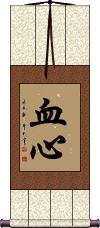
When you take 血心 apart, you find the sum is slightly different than the parts. The first character means blood, and the second means heart. It is important to note that for thousands of years, it was believed that your heart was both your soul and your mind in Asian culture. When you add blood to the heart, it is your whole being - the pure and clean dedication of your whole soul.
Most Chinese dictionaries define this as the sincerity of heart or a MEDICAL TERM!!!
Please think carefully before ordering this selection - it was only added as others have used this for coffee cups and other novelties (though perhaps naively).
Prideful Mind / Self-Respecting Heart
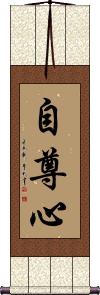
自尊心 is a Japanese and Korean word that means “pride” or “self-respect.”
The first Kanji/Hanja means oneself. The second can mean revered, valuable, precious, noble, or exalted. And the last Kanji/Hanja means heart, mind, and/or spirit.
While these characters make sense and hold the same general meaning in Chinese, this is not a normal Chinese word. This selection should only be used if your audience is Japanese or Korean.
See Also: Respect | Pride | Self-Reliance | Self-Control | Self-Discipline
Bodhicitta: Enlightened Mind
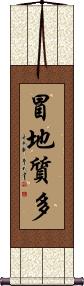
冒地質多 is a Chinese and Japanese way to write Bodhicitta.
冒地質多 is often translated as “the enlightened mind” or “enlightened heart.”
This title is strictly Buddhist and won't make sense to Chinese or Japanese people who do not have an expansive background in Buddhist terms, concepts, and scripture.
Confidence / Faithful Heart
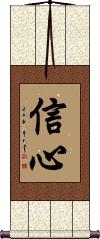
信心 is a Chinese, Japanese, and Korean word that means confidence, faith, or belief in somebody or something.
The first character means faith, and the second can mean heart or soul. Therefore, you could say this means “faithful heart” or “faithful soul.”
In Korean especially, this word has a religious connotation.
In the old Japanese Buddhist context, this was a word for citta-prasāda (clear or pure heart-mind).
In modern Japan (when read by non-Buddhists), this word is usually understood as “faith,” “belief,” or “devotion.”
See Also: Self-Confidence
No Mind / Mushin
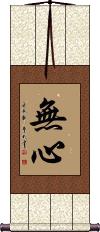
In Japanese, 無心 means innocent or without knowledge of good and evil. It literally means “without mind.”
無心 is one of the five spirits of the warrior (budo) and is often used as a Japanese martial arts tenet. Under that context, places such as the Budo Dojo define it this way: “No mind, a mind without ego. A mind like a mirror which reflects and dos not judge.” The original term was “mushin no shin,” meaning “mind of no mind.” It is a state of mind without fear, anger, or anxiety. Mushin is often described by the phrase “Mizu no Kokoro,” which means “mind like water.” The phrase is a metaphor describing the pond that clearly reflects its surroundings when calm but whose images are obscured once a pebble is dropped into its waters.
This has a good meaning in conjunction with Chan / Zen Buddhism in Japan. However, out of that context, it means mindlessness or absent-mindedness. To non-Buddhists in China, this is associated with doing something without thinking.
In Korean, this usually means indifference.
Use caution and know your audience before ordering this selection.
More info: Wikipedia: Mushin
Beautiful Heart / Beautiful Spirit
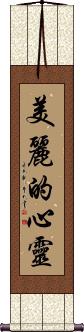
美麗的心靈 means a beautiful heart, a beautiful mind, or a beautiful spirit in Chinese.
Mind Like Water
Mizu No Kokoro
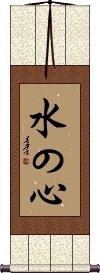
水の心 is the Japanese Buddhist and martial arts phrase, “Mizu no Kokoro,” which means “mind like water” or “heart of water.”
The phrase is a metaphor describing the pond that clearly reflects its surroundings when calm but whose images are obscured once a pebble is dropped into its waters.
Buddha Heart / Mind of Buddha
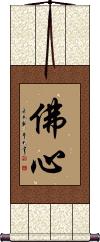
佛心 means the Buddha's mind, Buddha-heart, or the spiritually enlightened heart/mind.
The Buddha Heart is detached from good and evil and other such constructs. The Buddha Heart has mercy, compassion, and loving-kindness for all sentient life, the good, the wicked, and all in between.
The heart and mind (心) are the same concepts in the ancient Orient, so you can use heart and mind interchangeably in this context.
Determination
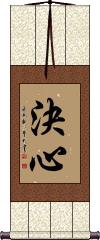
決心 is a Chinese, Japanese, and Korean word that holds the dictionary definition of determination but literally means determined heart.
The first character means to determine or determined.
The second character means heart, mind, or soul, so you can imagine that this form of determination partially means putting your heart into something. It can also be translated as resolve, resolution, or decision (as in a decision made and followed).
See Also: Devotion | Tenacious | Passion | Dedication | Will-Power
Zen Heart / Zen Mind
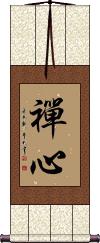
禪心 represents an image of your meditation coming from and filling your heart.
The meaning of the first character is “meditation” and the second character is usually defined as “heart” or sometimes “mind.”
There is a two-fold meaning here, as a good meditation session must start with a centered heart or mind. Yet at the same time, meditation serves to cleanse, focus, and center the heart and mind.
Beautiful Heart / Beautiful Mind
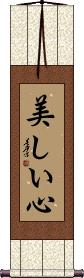
美しい心 means “beautiful heart” or “beautiful mind,” in Japanese.
The word for “heart” also means “mind” and sometimes “soul” in ancient Asia.
Note: Because this selection contains some special Japanese Hiragana characters, it should be written by a Japanese calligrapher.
Hall of the Heart / Sacred Heart

Besides the main title above, 心殿 also means “The heart or mind as a sacred hall” or “Heart Palace.”
心殿 has a Zen-influenced, introspective meaning. Popular in martial arts, meditation, or personal philosophy spaces.
The feeling of these characters is more inward and personal rather than religious.
Spirit
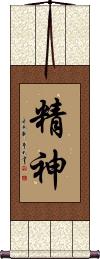
精神 is the kind of spirit you have if you perform well in sports or competitions. It is the idea of having a good attitude and putting your all into something - so much so that others can see or feel your spirit. It is the essence of your being that can only be subjectively described because there are no words that can fully explain what “spirit” really is.
For your information:
My Japanese dictionary further tries to explain this word by comparing it to mind, soul, heart, or intention.
My Chinese dictionary compares these characters to meanings like vigor, vitality, drive, and mentality.
My Korean dictionary defines this as mind, spirit, and soul.
Listen to Your Heart / Follow Your Heart
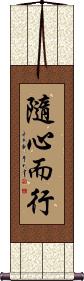
隨心而行 is the closest way to express this idea in Chinese. Literally translated, this phrase means “Allow your heart to dictate your behavior” or “Let your heart guide your conduct” in Chinese. You could also translate this as “follow your heart.” Or, with a bit of imagination, it could mean: “let your spirit be your guide.”
Note that in some cases, “heart” can mean “mind,” “soul” or even “spirit” in Chinese. In ancient China, it was thought that the big pumping organ in your chest was where your thoughts came from, or where your soul resides.
Ancient western thought followed a similar belief. Thus phrases like “I love you with all my heart” and “I give you my whole heart.”
The Original Mind
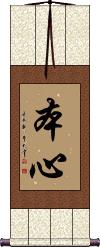
In Zen Buddhism, 本心 means “original mind” or “original heart,” which refers to one's Buddha-nature present from birth.
This can also be translated as true feelings, real intention, one's own heart, one's right mind, one's senses, one's conscience, or fundamental mind.
Note: 心 can mean heart or mind - thought in ancient Asia to be the same organ.
The Bodhi Mind
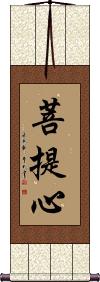
菩提心 means Bodhi-mind or Bodhi-heart.
This title represents the will to realize supreme enlightenment. The awakening of the Bodhi-mind is of utmost importance in Buddhist training.
Other definitions include the mind for or of bodhi, the awakened, enlightened mind, or having Buddha-nature.
Respectful Heart
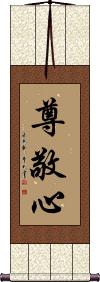
尊敬心 means respectful heart in Japanese, Chinese and Korean.
The root is 尊敬 which means respect, honor, reverence, esteem, and/or nobility. Therefore, you can also define this as an honorable heart, reverent heart, noble heart, etc.
In ancient times, it was thought your brain was the heart in your chest. Therefore, 心 or heart can also mean “mind.” Hence, 尊敬心 can also be translated as respectful mind, honorable mind, etc.
You'll see 尊敬心 romanized as Sonkeishin or Sonkeshin from Japanese.
Body Mind Spirit
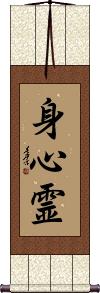
身心霊 means “body mind spirit” in Japanese.
This refers to your physical, mental, and spiritual presence.
This can also be translated as “body heart spirit” as 心 can mean mind or heart.
Note that this is a "word list" and not a proper phrase (with a subject, verb, and object) nor a typical title in Japanese. So it's not too commonly seen in Japan. However, the term 身心霊整合性医療 that refers to holistic medicine is gaining popularity.
Seeking Mind
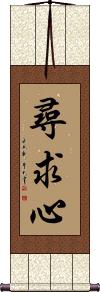
尋求心 means seeking mind or discursive thought in the context of Buddhism.
The first two characters are a word that means “to seek” or “to look for.” The last character means mind (or heart).
Peaceful Heart
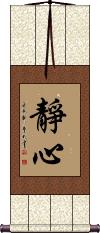
靜心 is how to write “peaceful heart” in Chinese.
The first character means peaceful, calm, and quiet. The second means heart but can also mean mind, soul, or spirit.
Because the word for heart/mind/soul is interchangeable in Chinese, this can also be translated as “a peaceful soul” or “a quiet mind.”
I have also seen this translated as “placid temperament” or “spirit of serenity,” especially in Japanese.
 While they once used the same first character form in Japan, they now use a slightly-simplified version in modern Japan (after WWII). This version is shown to the right, and can be selected for your wall scroll by clicking on that Kanji instead of the button above.
Purity of Mind
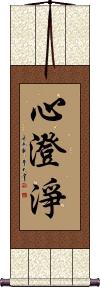
心澄淨 is the Buddhist concept of the pure and calm mind. It is believed that once you achieve a meditative state of pure focused thought, the mind becomes clear and calm. Although, others will say this means that achieving a calm mind will allow you to reach pure thought.
From Sanskrit, this is known as citta-prasāda. The concept of citta-prasāda is sometimes defined as “clear heart-mind,” or “the single and definitive aspiration.”
You are Always in My Heart
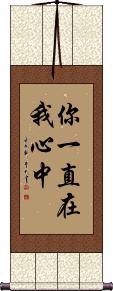
你一直在我心中 means “You are always in my heart” in Chinese.
你 = You
一直 = Always
在 = In/At
我 = Me/My
心中 = Heart/Mind
The idea or definition of heart and mind kind of overlap in ancient Chinese, so this can also mean “You are always in my mind.”
To a Willing Heart, All Things Are Possible
Where there is a will, there is a way
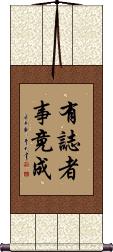
有志者事竟成 is an old Chinese proverb that has been translated many different ways into English. As you read the translations below, keep in mind that in Chinese, heart=mind.
Nothing is impossible to a willing heart.
Nothing is impossible to a willing mind.
Nothing is difficult to a willing heart.
Where there is a will, there is a way.
Nothing in the world is impossible if you set your mind to doing it.
A willful man will have his way.
If you wish it, you will do it.
A determined heart can accomplish anything.
All things are possible with a strong mind.
Calm and Open Mind
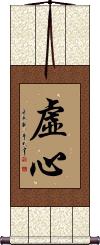
虛心 is a Buddhist term that speaks of being open-minded and/or having a calm and humble mind or heart.
With all the strength of your heart
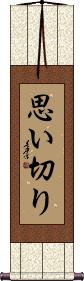
思い切り can be translated as “with all one's strength,” “with all one's heart,” “to the limits of your heart,” or “to the end of your heart/emotions.”
The character breakdown:
思い (omoi) thought; mind; heart; feelings; emotion; sentiment; love; affection; desire; wish; hope; expectation; imagination; experience
切り (kiri) bounds; limits.
Note: Because this selection contains some special Japanese Hiragana characters, it should be written by a Japanese calligrapher.
Perfectly Sincere Mind
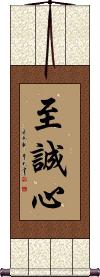
至誠心 is a Buddhist term that means “perfectly sincere mind” or “sincere and devoted heart.”
Heijoshin / Presence of Mind
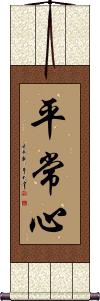
平常心 is the title Heijoshin, as associated with Kendo and Aikido schools of Japanese martial arts.
平常心 is also a word in Japanese that can be translated as “one's self-possession” or “presence of mind.”
In Chinese and Korean, this means “simplicity heart,” “composure,” “calmness,” or a “sense of orderliness.” In Chinese and Korean, this implies that you enjoy what you have, keep your heart in balance, and have no over-blown ambitions.
Iron Heart
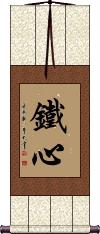
鐵心 can be translated as “iron heart,” “steel core,” or “iron mind” in Chinese and Japanese Kanji.
This is not a common term, but I added it here since so many were looking for “iron heart.” This is almost like saying you are without emotions or feelings - a very stoic person. This is not a Buddhist trait.
Soul Mates at Heart
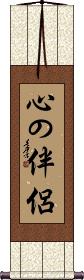
心の伴侶 is a Japanese-only title for soulmates.
心 means heart, soul, mind, core, or center. In ancient times, the heart was believed to be the mind or center of your soul and being.
の is a possessive article that connects everything here.
伴侶 means mates, companions, partners, and spouses.
This Japanese version of soulmates is about two partners, coupled or joined by their hearts.
Thinking Heart
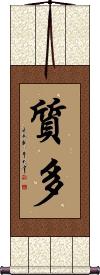
質多 is a Buddhist term that means “the heart considered as the seat of intellect” and “the thinking and reflecting mind.”
Peace of Mind
(five-character version)
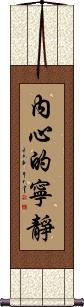
內心的寧靜 is the long way to express the idea of “peace of mind” in Chinese.
The first two characters mean heart or “innermost being.”
The middle character is a connecting modifier.
The last two characters mean peace, tranquility, or serenity.
Some may also translate this as “inner peace,” but I like our other inner-peace options for that idea.
This kind of makes sense in Korean but will have an archaic read - even by those who can understand Korean Hanja.
Brave Heart
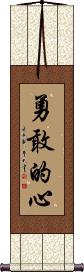
勇敢的心 is the title “Braveheart,” as in the movie starring Mel Gibson.
The character meanings break down this way:
勇敢 brave.
的 possessive particle.
心 heart/mind.
Tao / Dao of the Heart / Soul
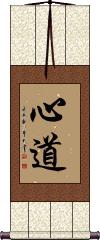
心道 means “The Way of the Heart” or “The Way of the Soul.” The first character means “heart” but can also mean soul, spirit, mind, or your essence. In this case, it is most accurately translated with the heart or soul meaning.
The second character is Dao as in Daoism. Please note, this is the same thing as Tao as in Taoism (just Romanized differently - it's always been the same in Chinese for about 2300 years.
Isshin-Ryu / Isshinryu
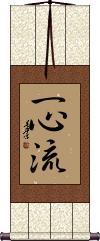
一心流 is the title for Isshin-Ryu Karate.
The literal meaning is “one heart method.” You could also translate it as “unified hearts methods.” It implies people doing things as if with one heart and mind.
The second Kanji can be defined as the heart, mind, or essence of your being. Clearly, there's a multitude of ways you can define this title in English.
See Also: Isshin-Kai
Spiritual Strength / Strength of Spirit
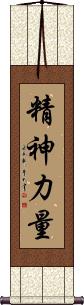
精神力量 is a title that speaks of one's soul or spirit and the capacity or strength that soul possesses.
The first two characters mean mind, heart, spirit, and/or soul.
The last two characters mean strength, capacity, or ability.
Note: Separately, these are two words in Japanese and can be pronounced, but this does not make a natural title in Japanese (best if your audience is Chinese).
Devotion / Dedication / Attentive / Focused
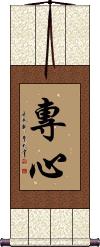
專心 makes a word that means “paying attention with your heart.”
It's often translated as “dedication,” as in “be absorbed in” or “concentrate one's efforts.” It's also used to mean “with the single mind,” “whole-heartedly,” “paying attention,” “undivided attention,” “concentration (-ed),” “engrossed,” “devotionally (listening/watching),” and/or “attentive.”
The first character means “for a particular person, occasion, or purpose,” “focused on one single thing,” “concentrated,” and sometimes, “special.”
The second character means “heart” or “mind” by itself.
My favorite translation, which comes from the Oxford Advanced Chinese/English Dictionary, is, “wholehearted devotion.”
If it seems like the meaning of this word is quite open, you are correct. The context in which the word is used matters a lot. It can mean different things depending on how you use it. This makes it kind of nice as you can decide what this means to you (within some limits). This is always positive in meaning, so even if a Chinese person reads it differently than you, it will still have a good meaning.
 In Japanese, they tend to use a variation of the second character which has one less stroke. If you want your calligraphy written this Japanese form, please click on the Kanji shown to the right instead of the button above. Note: Japanese and Chinese people will recognize either form.
Strong Body, Strong Mind
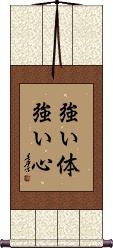
強い体強い心 is a way to write “strong mind, strong body” in Japanese.
Each of the two lines starts with 強い (tsuyoi) which means: strong; powerful; mighty; potent; resistant; resilient; durable; tough; stiff; hard; inflexible.
The body is represented with 体 (the ancient version is 體, romanized as karada), which means: body; build; physique; posture; torso; trunk; health.
Mind is represented with 心 (kokoro), which can mean heart, mind, or soul, depending on context.
強い體強い心 is not a common phrase in Japanese, so it's not the most natural title for calligraphy. In English, you might want to write it, “strong mind, strong body” but, “strong mind, strong body,” is more natural in Japanese.
Note: Because this selection contains some special Japanese Hiragana characters, it should be written by a Japanese calligrapher.
Strong-Willed / Strong of Heart
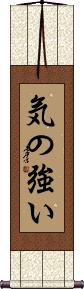
気の強い means strong-willed or strong of heart in Japanese.
Here's the character breakdown of this Japanese title:
気 (ki) spirit; mind; heart; nature; motivation; intention; feelings; essence.
の (no) possessive particle.
強い (tsuyoi) strong; powerful; mighty; potent; resistant; resilient; durable.
Note: Because this selection contains some special Japanese Hiragana characters, it should be written by a Japanese calligrapher.
Independent Spirit / Independent Heart
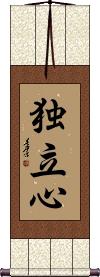
獨立心 means independent spirit or independent heart in Japanese.
The first two characters mean independent or independence. The third character means spirit, heart, or mind.
獨立心 is a Japanese term, although Chinese people could guess the meaning (the characters make sense individually in Chinese but are not often used this way). Also, the first character would be written 獨 in Traditional Chinese versus 独 which is the Simplified Chinese and modern Japanese version.
Inner Light / Intelligence
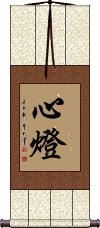
心燈 is the Buddhist concept of “The Lamp of the Mind” or “Inner Light.”
It's kind of the Buddhist way to express intelligence.
Directly translated, this means “heart light” or “heart lamp.”
Note: In ancient China, the ideas of heart and mind are interchangeable.
Kemo no Shin
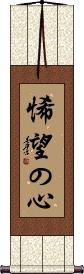
悕望の心 is “Kemō no Shin,” a Japanese Zen Buddhist word that means “The seeking mind” or “[Having] The mind to seek something.”
The first two characters mean longing for. The last two mean “of mind” or “of heart.” So, this is a mind that longs for or seeks knowledge, etc.
Seishin-Kai / Seishinkai
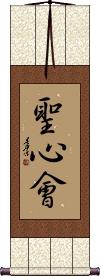
聖心会 is the Japanese martial arts title “Seishinkai” or “Seishin-Kai.”
It literally means “Sacred Heart Association” or “Pure-Heart Club.”
聖 can mean holy, sacred, saint, sage, virtuous, expert, wise and good, upright, or correct.
心 can mean heart, mind, center, core, spirit, soul, or vitality.
聖心 creates a word meaning sacred heart, or the holy mind (that of Buddha).
会 in Japanese means association, club, meeting, assembly, party, gathering, conference, athletic meet, or society.
Shoshin-Ryu
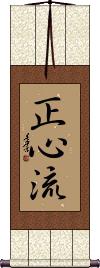
正心流 is a Japanese title that means “right heart style,” “true mind method,” or “truthful heart school.”
The first character means right, correct, greater, or true.
The second character means heart, mind, soul, or essence.
The third character means style, method, or some will translate it as a school.
Please note, there is more than one martial arts school that romanizes as Shoshin-Ryu.
Shinyo-Kai
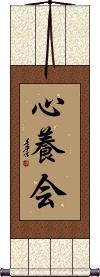
心養会 is the title for Shinyō-kai or Shinyōkai - a style of Karate-Dō.
Added for the Mind Body Dojo in El Cerritos, CA.
If you translate this directly, the meaning is Heart/Mind Nurturing Association.
Bushindo
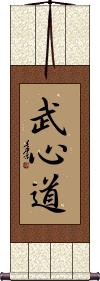
武心道 is the title for Bushindo meaning “warrior heart way” or “warrior mind way.”
In English, we might translate it as “The way of the warrior's heart.”
Shoshin-Ryu
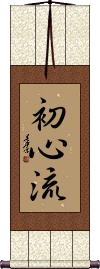
初心流 is often translated in Japanese as “beginner's mind style,” “beginner's spirit method,” or “beginner’s-mind school”
The first character means first, initial, primary, junior, beginning, or basic.
The second character means heart, mind, soul, or essence.
The third character means style, method, or some will translate it as a school.
Please note, there is more than one martial arts school that romanizes as Shoshin-Ryu.
The Spirit of Dragon and Tiger
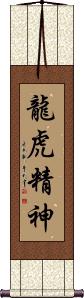
龍虎精神 means the spirit of the dragon and tiger.
It speaks to the vitality and vigor that is the nature of these two creatures.
Beyond “spirit,” the last two characters can also mean mind, soul, or heart. Therefore, you can also say this means “Heart of the Dragon and Tiger,” etc.
龍虎精神 is often titled “Ryukoseishin” in many Japanese martial arts.
Shingitai / Shin Gi Tai
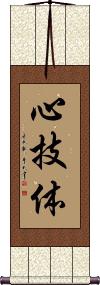
心技体 is the Japanese title “shin gi tai” or “shingitai.”
This can refer to the three elements of Sumo wrestlers or martial artists, “heart-technique-physique.”
Here is what each character represents:
心 (shin) mind, heart, and spirit.
技 (gi) skill, knowledge, and experience.
体 (tai) body and physical effort.
心技体 have the same meanings in Chinese, though this title is used much more often in Japanese.
Remember
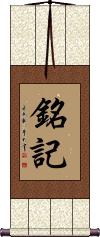
銘記 means to keep in mind, to take note of, or simply to remember, in Chinese characters and Japanese Kanji.
The first character means to engrave, inscribe, or carve an inscription.
The second character means to remember, note, mark, sign, record, history, chronicle, or annals.
When used in the context of a person, this means to engrave on the heart or to inscribe a memory in one's mind. In short, it's the idea of deeply remembering something, some event, or someone forever.
Independent Spirit
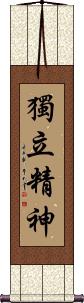
獨立精神 means independent spirit in Chinese.
The first two characters mean independent, independence, or to stand alone.
The last two characters mean spirit, spiritual, vigor, vitality, drive, mind, consciousness, thought, essence, heart, or soul.
With this information, you can make your translation combination such as “independent heart,” “stand-alone spirit,” or more creatively, “the drive to stand alone” in English. There are a lot of ways to interpret 獨立精神.
No Worries
My Australian friends always say, “No worries, mate.” It's caught on with me, though I drop the “mate” part since it confuses my fellow Americans.
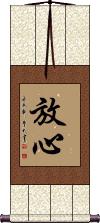
If you would like to express the idea of “no worries,” 放心 is the best and most natural way to say it in Chinese.
The characters you see to the left can be translated as “put your mind at rest” or “to be at ease.” You could literally translate “no worries,” but it doesn't “flow” like this simple Chinese version.
For your info, the first character means to release, to free, to let go, to relax, or to rest. The second character means your heart or your mind.
Note that in Japanese and Korean, this holds the similar meaning of “peace of mind” but can also mean absentmindedness or carelessness, depending on context.
Keiko Shin
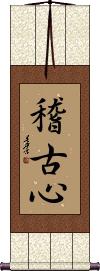
稽古心 is Keiko Shin in Japanese Kanji.
The first two characters, 稽古 mean to learn from the ancients, to study the classic texts, practice, training, or study.
The last character, 心, means heart or mind.
Omoi / Desire
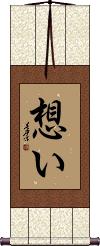
想い is a Japanese word that is often translated as desire.
Other definitions include thought, imagination, mind, heart, wish, hope, expectation, love, affection, feelings, emotion, sentiment, and/or experience. The context in which this word is used determines how it is understood.
Free Spirit
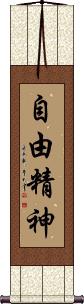
The first two characters mean freedom or liberty.
The second two characters mean spirit, heart, mind, or soul.
Together, 自由精神 is a title that is very similar to the English term “free spirit.”
See Also: Freedom | Independence
Warrior Within
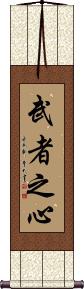
武者之心 means “Warrior Within” from the Chinese video game title, “Prince of Persia: Warrior Within.”
This more literally means “warrior or the heart” or “warrior of the soul/mind.”
Inner Freedom
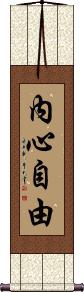
內心自由 means Inner Freedom in Chinese.
The first word, 内心, means innermost being, the mind within, or the heart within.
The second word, 自由, means freedom, free, or liberty.
There is more than one way to say inner freedom in Chinese. This version is the most common.
Koushinkan / Koshinkan

孝心館 is the title for Koushinkan, Koshinkan, or Kōshin-Kan.
The romanization of this title varies a little, but the original characters are the same.
孝 = Filial piety or obedience.
心 = Heart, mind, intention, or center.
馆 = Building or establishment (dojo).
This can be pronounced in Chinese and has the same meaning, but you should consider this a Japanese martial arts title.
Free Spirit
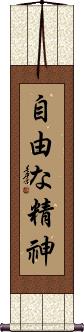
自由な精神 is very similar to the English term “free spirit.”
The first two characters mean freedom or liberty.
The middle character is a connecting Hiragana which is needed for Japanese grammar.
The last two characters mean spirit, heart, mind, or soul.
See Also: Freedom | Independence
Reiki Precepts by Usui Mikao
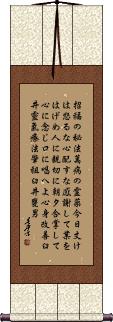
These are the precepts of Reiki that are attributed to Usui Mikao.
Here is a breakdown of the characters and a rough translation:
招福の秘法, 萬病の霊薬。
Invite blessings of [the] secret method, 10,000 illnesses of spiritual medicine.
今日丈けは: 怒るな, 心配すな, 感謝して, 業をはげめ, 人に親切に。
At least for today: Do not be angry, do not worry, be grateful, work with diligence, and be kind to people.
朝夕合掌して, 心に念じ, 口に唱へよ, 心身改善。
Morning [and] evening perform gassho (join hands), [with your] heart/mind in silent prayer, [with your] mouth chant, [thusly] mind [and] body [will] reform/improve.
臼井靈氣療法! -肇祖, 臼井甕男。
Usui Reiki Ryōhō! -Founder, Usui Mikao.
The middle portion of this is often titled, “The Five Principles of Reiki” and makes a nice calligraphy selection by itself. The Japanese text presented here can be considered the more verbose version.
Note: Because this selection contains some special Japanese Hiragana characters, it should be written by a Japanese calligrapher.
Warrior Soul / Heroic Spirit
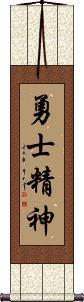
勇士精神 can be translated as the warrior's spirit or warrior's soul. The first two characters can be translated as “warrior” or literally “brave soldier/man,” although some will translate this word as “hero.” Therefore, this is also how to say “heroic spirit.”
The second two characters mean vigor, vitality, drive, spirit, mind, heart, mental essence, and psychological component. Basically “your soul.”
We have two versions of this phrase. The only difference is the first two and last two characters are swapped. The version here suggests that you admire or like the idea of the spirit of a warrior. The other version suggests that you are the warrior or hero.
Purified Spirit / Enlightened Attitude
A Japanese martial arts title/concept
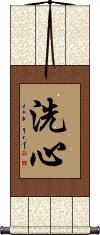
The first Kanji alone means to wash, bathe, primness, cleanse or purify.
The second Kanji means heart, mind, soul, or essence.
Together, these two Kanji create a word defined as “purified spirit” or “enlightened attitude” within Japanese martial arts.
洗心 is one of the five spirits of the warrior (budo) and is often used as a Japanese martial arts tenet. Under that context, it's often defined as a spirit that protects and harmonizes the universe. Senshin is a spirit of compassion that embraces and serves all humanity and whose function is to reconcile discord in the world. It holds all life to be sacred. It is the Buddha mind.
This title will only be familiar to Japanese who practice certain martial arts. Others may not recognize this word at all.
洗心 does not show up as a word in too many Chinese dictionaries, but it can be read and has the same meaning in Chinese.
 There is an issue with the first character. The original, and probably most correct version is shown above. However, many dojo documents and other sources have used a more simple first character. Arguments ensue about which version is correct. If you want to be correct in the Japanese language, use the "Select and Customize" button above. If you want to match the Kanji used by your dojo, click the Kanji shown to the right. There is a slightly different meaning with this first character which means before, ahead, previous, future, precedence.
Seishin Budo
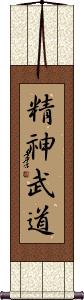
精神武道 is the Japanese martial arts title, Seishin Budo.
The first two characters, 精神, can mean vigor, vitality, drive, spiritual, mind, spirit, soul, heart, ethos, attitude, mentality, will, intention, essence, and fundamental significance.
The last two characters, 武道, are the Japanese word for martial arts (literally the Martial Way).
This title can also be romanized as Seshin Budou or Seishin Budō.
Soul of a Warrior
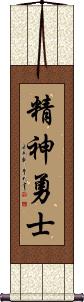
精神勇士 can be translated as the spirit or soul of a warrior. The first two characters can be translated as vigor, vitality, drive, spirit, mind, heart, mental essence, and psychological component. Basically, “your soul.”
The second two characters mean “warrior” or literally “brave soldier/man,” although some will translate this word as “hero.” Therefore, this is also how to say “soul of a hero.”
Note: This title is best for Chinese and old Korean. It does make sense in Japanese but is not a common or natural Kanji combination in Japanese.
We have two versions of this phrase. The only difference is the first two and last two characters are swapped. The version here suggests that you are the warrior or hero. The other version suggests that you admire or like the idea of the spirit of a warrior.
My True Love
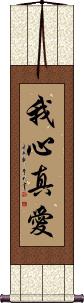
我心真愛 is a slightly poetic way to express this sentiment to someone.
The meaning is “My True Love,” but the characters directly translate as “I/Me/My Heart/Mind True/Real Love.”
Note that Chinese grammar and construction are different, so this sounds very eloquent and artsy in Chinese.
In Korean Hanja, the third character should be written differently. Just let me know when you place your order if you want that version - it will still make sense in Chinese. This phrase makes sense in Korean but is not commonly used.
Fatal error: Cannot redeclare foreignPrice() (previously declared in /home/gwest/web/chinesescrollpainting.com/public_html/includes/currencyconverter.php:22) in /home/gwest/web/orientaloutpost.com/public_html/includes/currencyconverter.php on line 22