Many custom options...


And formats...



Be Like Water in Chinese / Japanese...
Buy a Be Like Water calligraphy wall scroll here!
Personalize your custom “Be Like Water” project by clicking the button next to your favorite “Be Like Water” title below...
3. Water
4. Feng Shui
5. River
6. Water Polo
7. Large River
10. Mind Like Water
11. Water Tiger
12. Water Rat
13. Five Elements
14. Water Rooster
15. Water Horse
16. Water Dragon
17. Water Snake
18. Water Tiger
19. Water Rabbit
20. Water Rat
21. Water Dog
22. Water Monkey
23. Flower in the Mirror, Moon on Water
25. Water Goat/Sheep
26. Water Ox/Bull
27. Water Pig/Boar
30. Dripping Water Penetrates Stone
31. Fire and Water Have No Mercy
32. Put out a burning wood cart with a cup of water
33. Not Only Can Water Float A Boat, It Can Sink It Also
34. Drinking the water of a well: One should never forget who dug it
35. Water Dragon / Rain Dragon
Be Like Water
Quote from Lao Tzu
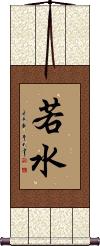
若水 is part of a very old saying from Lao Tzu.
In these two characters, there is a suggestion to be like water. The full phrase is about the goodness and purity of water. So, when this suggests being like water, it is actually a suggestion to be a good person (one who does not dishonor himself/herself, etc.).
Be Like Water
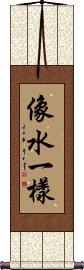
像水一樣 is a short quote from a much longer statement by Bruce Lee.
He summarized how people should be flexible to all circumstances, attacks, or situations. In the end, he exclaims, “Be like water, my friend.” 像水一樣 is the “Be like water” part alone since that seems to be what most people want.
Ultimate Goodness of Water
Quote from Lao Tzu
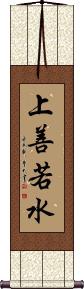
上善若水 is a quote that is sometimes presented as “Be like water.”
However, this is an ancient quote from the great philosopher Lao Tzu. It suggests that the ultimate goodness and purity (in the world) is water. Many take this as a suggestion to be like pure/good water.
Water
(One of the five elements)
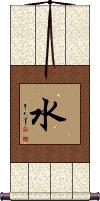
水 is the symbol for water in Chinese, Japanese Kanji, and old Korean Hanja.
Water is one of the five elements that ancient Chinese believed all things were composed of. These elements are also part of the cycle of Chinese astrology. Every person has both an animal sign, and one of the five elements according to the date of their birth. See also Five Elements and Chinese 12 Animals / Zodiac.
Feng Shui
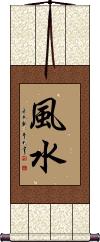
風水 is the famous technique and approach to arranging your home externally around natural features and internally to create balance and peace.
These two characters literally mean “wind water.” Obviously, the title is far more simple than the concept behind this subject.
It may enlighten you slightly to know that the character for “wind” can also mean style, custom, or manner in some contexts. This may apply somewhat to this title.
In a technical sense, this title is translated as Chinese geomancy.
River
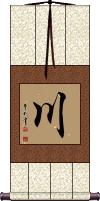
川 means river or stream in Chinese, Japanese Kanji, and old Korean Hanja.
In Japanese, this can be a surname when pronounced as Sakigawa.
Water Polo
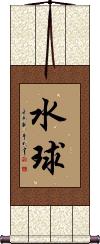
水球 is the Chinese, Japanese Kanji, and old Korean Hanja title for water polo.
The literal meaning of the characters is “water ball.”
Large River
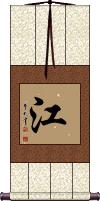
江 means large river in Chinese, Japanese Kanji, and old Korean Hanja. This generally refers to a river big enough that it's navigable by cargo boats, passenger boats, or small ships.
In Japanese, this can be a surname when pronounced as Minkou or just Kou.
Five Elements
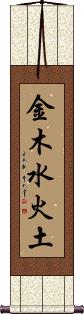
金木水火土 is a list of the Chinese characters for the five elements in a comfortable order (meaning that they “feel right” to a Chinese person who views this arrangement).
The order is metal, wood, water, fire, and earth.
Note that sometimes the metal element is translated as gold. And earth refers to soil versus the whole planet earth.
Year Of The Water Rabbit
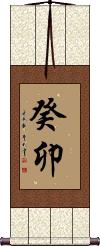
癸卯 is the designation for the 40th year of the 60-year or sexagenary cycle, e.g. 1903, 1963, or 2023.
This is the year of the Water Rabbit. The characters here designate the year in a special way, but do not literally mean water and rabbit.
The 60 year cycle has 5 elements and 12 animals. As each cycles every year, the math works out to 5 x 12 = 60.
Mind Like Water
Mizu No Kokoro
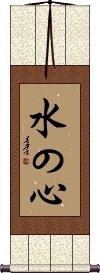
水の心 is the Japanese Buddhist and martial arts phrase, “Mizu no Kokoro,” which means “mind like water” or “heart of water.”
The phrase is a metaphor describing the pond that clearly reflects its surroundings when calm but whose images are obscured once a pebble is dropped into its waters.
Water Tiger
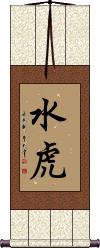
水虎 means “water tiger” in Chinese and Japanese.
Water Rat
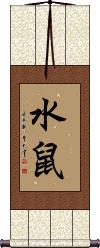
This means Water Rat in Chinese.
As a year designator, written 壬子 for 1912, 1972, or 2032.
Five Elements
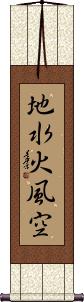
地水火風空 is the specifically-Japanese version of the five elements.
This is a little different than the ancient or original Chinese version.
The elements are written in this order:
1. Earth / Terra / Ground
2. Water
3. Fire
4. Wind / Air
5. Sky / Emptiness / Void / Ether
Note: This set of Kanji can also be romanized as “ji sui ka fuu kuu,” “jisuikafuukuu,” or “jisuikafuku.”
These can also be written in the order 地火風水空 (chi ka sui fuu kuu). Let me know when you place your order if you want the Kanji to be in this character order.
Water Rooster
The Year of the Water Rooster
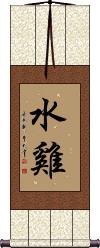
水雞 is Water Rooster in Chinese.
In the Chinese zodiac and sexagenary (60-year) cycle, this combination occurs in years that include 1873, 1933, 1993, and 2053.
In the sexagenary cycle, this year is represented by 癸酉.
See Also: Rooster
Water Horse
The Year of the Water Horse
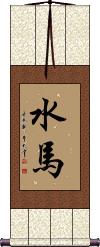
水馬 is Water Horse in Chinese.
In the Chinese zodiac and sexagenary (60-year) cycle, this combination occurs in years that include 1882, 1942, 2002, and 2062.
In the sexagenary cycle, this year is represented by 壬午.
See Also: Horse
Water Dragon
The Year of the Water Dragon
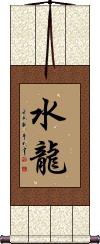
水龍 is Water Dragon in Chinese.
In the Chinese zodiac and sexagenary (60-year) cycle, this combination occurs in years that include 1892, 1952, 2012, and 2072.
In the sexagenary cycle, this year is represented by 壬辰.
See Also: Dragon
Water Snake
The Year of the Water Snake
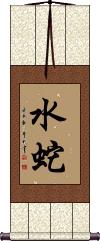
水蛇 is Water Snake in Chinese.
In the Chinese zodiac and sexagenary (60-year) cycle, this combination occurs in years that include 1893, 1953, 2013, and 2073.
In the sexagenary cycle, this year is represented by 癸巳.
See Also: Snake
Water Tiger
The Year of the Water Tiger
水虎 is Water Tiger in Chinese.
In the Chinese zodiac and sexagenary (60-year) cycle, this combination occurs in years that include 1902, 1962, 2022, and 2082.
In the sexagenary cycle, this year is represented by 壬寅.
See Also: Tiger
Water Rabbit
The Year of the Water Rabbit
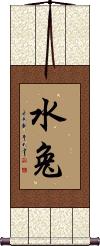
水兔 is Water Rabbit in Chinese.
In the Chinese zodiac and sexagenary (60-year) cycle, this combination occurs in years that include 1903, 1963, 2023, and 2083.
In the sexagenary cycle, this year is represented by 癸卯.
See Also: Rabbit
Water Rat
The Year of the Water Rat
水鼠 is Water Rat in Chinese.
In the Chinese zodiac and sexagenary (60-year) cycle, this combination occurs in years that include 1912, 1972, 2032, and 2092.
In the sexagenary cycle, this year is represented by 壬子.
See Also: Rat
Water Dog
The Year of the Water Dog
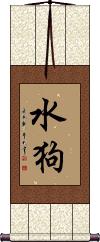
水狗 is Water Dog in Chinese.
In the Chinese zodiac and sexagenary (60-year) cycle, this combination occurs in years that include 1922, 1982, 2042, and 2102.
In the sexagenary cycle, this year is represented by 壬戌.
See Also: Dog
Water Monkey
The Year of the Water Monkey
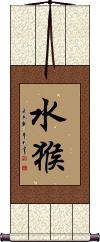
水猴 is Water Monkey in Chinese.
In the Chinese zodiac and sexagenary (60-year) cycle, this combination occurs in years that include 1872, 1932, 1992, and 2052.
In the sexagenary cycle, this year is represented by 壬申.
See Also: Monkey
Flower in the Mirror, Moon on Water
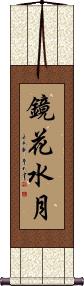
鏡花水月 is an old Asian proverb that means “flowers in a mirror and the moon reflected in the lake” or “flowers reflected on a mirror and the moon reflected on the water's surface.”
Literally, 鏡花水月 reads “Mirror Flower, Water Moon.”
Figuratively this can be used to represent a lot of different ideas. It can be used to express an unrealistic rosy view or viewing things through rose-tinted spectacles. So you can use it to relay an idea about something that is visible but has no substance,
something that can be seen but not touched, or something beautiful but unattainable such as dreams or a mirage.
This expression is used to describe things like the subtle and profound beauty of poems that cannot be described in words.
鏡 = Mirror (or lens)
花 = Flower(s)
水 = Water
月 = Moon
Can also be written 水月鏡花 (just a slight change in word/character order).
Year of the Water Rabbit
1903 1963 2023
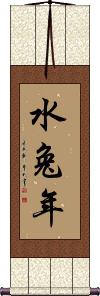
水兔年 means water rabbit year.
This happens to be the combination in the 60-year cycle for the year 2023, starting on Feb 4th, 2023.
Water Goat/Sheep
The Year of the Water Goat/Sheep
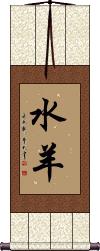
水羊 is Water Goat/Sheep in Chinese.
In the Chinese zodiac and sexagenary (60-year) cycle, this combination occurs in years that include 1883, 1943, 2003, and 2063.
In the sexagenary cycle, this year is represented by 癸未.
See Also: Goat/Sheep
Water Ox/Bull
The Year of the Water Ox/Bull
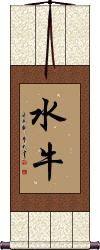
水牛 is Water Ox/Bull in Chinese.
In the Chinese zodiac and sexagenary (60-year) cycle, this combination occurs in years that include 1913, 1973, 2033, and 2093.
In the sexagenary cycle, this year is represented by 癸丑.
See Also: Ox/Bull
Water Pig/Boar
The Year of the Water Pig/Boar
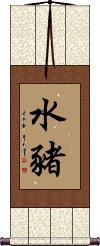
水豬 is Water Pig/Boar in Chinese.
In the Chinese zodiac and sexagenary (60-year) cycle, this combination occurs in years that include 1923, 1983, 2043, and 2103.
In the sexagenary cycle, this year is represented by 癸亥.
See Also: Pig/Boar
Chop Wood, Carry Water
Before enlightenment or after, chores remain.
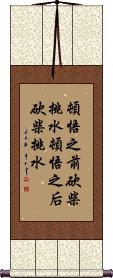
頓悟之前砍柴挑水; 頓悟之後砍柴挑水 means “Before enlightenment, chop wood, carry water; After enlightenment, chop wood, carry water.
This is a Chinese proverb that is attributed to 吴力 (Wú Lì) who lived between 1632 and 1718 - living part of his life as a devout Buddhist, and many years as a Catholic Jesuit Priest in China - what an interesting life!
This has been explained many times in many ways. I am a Buddhist, and here is my brief take on this proverb...
Before enlightenment, one may find daily chores mundane, tedious, and boring. However, upon reaching enlightenment one is not relieved of the details of daily life. An enlightened person will, however, see such chores as a joy, and do them mindfully.
There is another version floating around, which is 在你領悟之前砍柴、運水。在你領悟之後,砍柴、運水。
If you want this other version, just contact me. The meaning is the same, just different phrasing.
Earth Fire Water Air
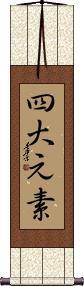
四大元素 is the title for the four classical chemical elements (fire, earth, air, and water) in Japanese.
四大 = four great/big. 元素 = elements. So 四大元素 literally means “Four Great Elements.”
Dripping Water Penetrates Stone
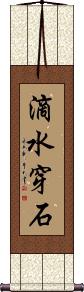
滴水穿石 is a Chinese proverb that means, dripping water penetrates stone.
The figurative meaning can be translated as:
Constant perseverance yields success.
You can achieve your aim if you try hard without giving up.
Persistent effort overcomes any difficulty.
While 滴水穿石 is the most common character order, you will likely see 水滴石穿, might see 滴水石穿, and will rarely see 小水穿石 in the wild.
Fire and Water Have No Mercy
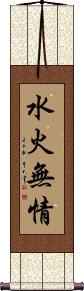
水火無情 is a Chinese proverb that means “fire [and] water have-not mercy.”
This serves to remind us that the forces of nature are beyond human control.
Some may also translate this as “implacable fate.”
Put out a burning wood cart with a cup of water
An utterly inadequate measure
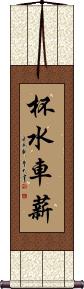
杯水車薪 is a warning against a futile effort.
This proverb literally refers to one who is “trying to put out a burning cart of wood with a cup of water,” or “throw a cup of water on a cartload of wood.” The lesson to be learned is about using the right measure or tool for the job and not wasting your effort if you are inadequately equipped for the task at hand - in other words the postscript should be “go get a bucket or a fire hose.”
Not Only Can Water Float A Boat, It Can Sink It Also
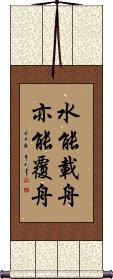
Many things have opposite properties. The water you drink can also drown you. Pork may nourish you and keep you alive but under-cook it and it could kill you. Potassium nitrate is often used as a fertilizer to grow the food that sustains us but it's also been used as an explosive to topple buildings and destroy us.
This concept is easily associated with “yin yang” where an element has two opposite properties that are as different as night and day.
This proverb's meaning can be summed up this way: “Anything that can lead you to success may also contain great risks.”
This phrase is known in literary circles by Korean people (scholars or literature). It is therefore also a valid proverb in Korean Hanja, though most Koreans would not be able to make sense of it.
Please note that there is an unwritten rule when the same character appears twice in the same phrase, the calligrapher will alter the appearance so that no two characters are exactly alike in the same piece. This calligraphy has two repeating characters that will be written differently than they appear here.
Drinking the water of a well: One should never forget who dug it
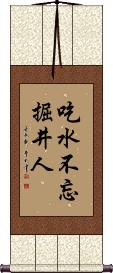
This proverb suggests that one should always be grateful to those who helped one succeed.
And remember your ancestors and those that came before you whose sacrifices made your present life better.
Some Chinese will separate the intended meaning from this proverb and translate this as “Don't forget the people who once helped you.” In Modern China, this idiom is virtually never used to refer to an actual well.
Note: This can be pronounced in Korean but it's not a commonly used phrase.
Water Dragon / Rain Dragon
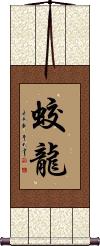
蛟龍 is the title for the water dragon is the hornless or scaled dragon. 蛟龍 is the king of all aquatic animals with the ability to control rain and floods.
In Japanese, the rain dragon can represent hidden genius. This dragon's domain is the deep murky water, thus with hidden potential. This can also be the Japanese given name Kouryuu.
Water Dragon / Coiled Dragon
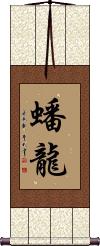
蟠龍 is sometimes seen as a lower-level of dragon or a dragon that has not-yet-reached its potential.
蟠龍 is often defined as a “lake dragon” that has not ascended to heaven.
Another way to put that is a dragon coiled on the earth, which has not yet ascended to the sky.
Warriors Adapt and Overcome
Soldiers need a fluid plan
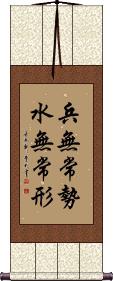
This literally translates as: Troops/soldiers/warriors have no fixed [battlefield] strategy [just as] water has no constant shape [but adapts itself to whatever container it is in].
Figuratively, this means: One should seek to find whatever strategy or method is best suited to resolving each individual problem.
This proverb is about as close as you can get to the military idea of “adapt improvise overcome.” 兵無常勢水無常形 is the best way to express that idea in both an ancient way, and a very natural way in Chinese.
Fatal error: Cannot redeclare foreignPrice() (previously declared in /home/gwest/web/chinesescrollpainting.com/public_html/includes/currencyconverter.php:22) in /home/gwest/web/orientaloutpost.com/public_html/includes/currencyconverter.php on line 22