Custom Dragon Symbol Chinese & Japanese Calligraphy Wall Scroll
See our Chinese Zodiac and Animal Signs webpage which has more information if you were born in the year of the dragon.
First, about Chinese/Japanese/Asian Dragons...
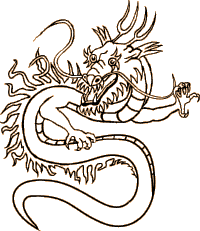
The dragon as known in Asia is not the wild and almost gruesome creature depicted in the stories of medieval Europe.
Instead, the Chinese dragon is full of wisdom, strength, and goodness. It is said the dragon can be found in the unclimbable mountains, or deep in the unfathomed sea. When active, he can be found in the storm clouds flying high above.
Of course, he is also known as the god of water, so the clouds and sea are home to him.
The dragon can grab lightning with his claws and the roar of a hurricane is really the voice of the dragon.
He is the chief of all scaled animals, and is described in ancient writings this way:
The head of a camel, horns of a deer, eyes of a rabbit, ears of a bull, neck of a snake, belly of a frog, scales of a koi fish (carp), claws of a hawk, and palms of a tiger.
These are the nine "resemblances" of a dragon - one of the reasons that 9 is seen as "the number of the dragon".
The official Romanized Chinese for dragon is "long" but in older English books it's sometimes spelled "lung". Both of these spellings don't tell you the true vowel sound which is really like the English word "oh".
More Dragon Info:
In Chinese culture, the dragon represents power and for many generations, only the emperor could dare to wear the symbol of a dragon on their clothing.
If you hang a dragon calligraphy scroll on your wall, it indicates that you are strong and powerful. A great gift for a corporate executive with a chip on his shoulder - lol.
This is probably the most popular Chinese character for tattoos these days.
You'll see it on the shoulders of pro-basketball players, and on the hips of pop
star divas. Of course, half of them have no idea what this symbol means,
and the other half incorrectly think it directly means "warrior" or "power".
Of course, long before it became a tattoo staple, the mythological dragon roamed the earth - at least in the legends and minds of Asian people.
The history of the dragon is hidden deep in myth and history. Drawings and symbols of this mythological animal can be traced back to prehistoric tribal peoples of China. Evidence of the dragon's importance in Chinese culture can be traced to dragon figures and other artifacts unearthed from the Yin Dynasty (3000 years ago).
See our Chinese Dragon Artwork Here
...or select your Chinese dragon calligraphy artwork below...
1. Dragon
4. Black Dragon
6. Blue Dragon
9. Water Dragon / Coiled Dragon
10. Crouching Tiger Hidden Dragon
11. Dragon Fist
12. The Spirit of the Dragon Horse
13. The Spirit of the Dragon Horse and Power of a Tiger
14. Dragon Lady
16. Dragon and Phoenix Brings Luck
17. Dragon Spirit
18. The Spirit of Dragon and Tiger
19. Dragon Warrior
20. Dragon Ball Kai
22. Dragon Quest
23. Earth Dragon
24. Fire Dragon
25. Flying Dragon
27. Golden Dragon
28. Green Dragon / Blue Dragon
29. Hidden Dragon Crouching Tiger
31. Iron Dragon
32. Little Dragon
33. Red Dragon
34. Red Dragon / Vermillion Dragon
35. Spirit Of The Dragon Martial Arts
36. Celestial Dragon / Tian Long
37. Water Dragon / Rain Dragon
39. White Dragon
40. Yellow Dragon
41. The Five Animals
Dragon
Year of the Dragon / Zodiac Sign
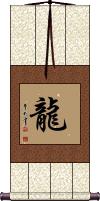
龍 is the character for dragon in Chinese, old Korean Hanja, and Japanese Kanji.
The dragon is a creature of myth and legend that dominates Chinese, Japanese, and even European folklore. In China, the dragon is the symbol of the Emperor, strength, and power, and the Chinese dragon is known as the god of water.
From the Chinese Zodiac, if you were born in the year of the Dragon, you . . .
Have a strong body and spirit.
Are full of energy.
Have vast goals.
Have a deep level of self-awareness.
Will do whatever you can to “save face.”
See also our Chinese Zodiac or Dragon Calligraphy pages.
Dragon / Emperor Symbol
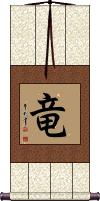
竜 is an alternate form of the dragon.
Still pronounced the same in Chinese, Japanese, and Korean.
This particular Kanji is often associated as an imperial symbol as well as representing the mythical Asian dragon. You may have seen it on the chest or flag of the emperor in old Japanese and Chinese movies.
Note: I would rate this as a non-universal alternate form. The other dragon character is by far more common, and universally understood.
We strongly recommend  if you are looking for the symbol of dragon.
Blue Dragon / Azure Dragon
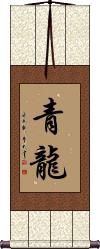
青龍 is a scholarly title for “Blue Dragon” or “Azure Dragon.”
You'll find this title used in ancient Chinese literature and astronomy. This dragon has dominion over the eastern sky or eastern heavens. The Azure Dragon is also noted for representing the spring season. Also seen as an auspicious omen.
Emperor Huizong of the Song Dynasty canonized the five colored dragons as “kings.” The Azure Dragon represents the most compassionate of kings.
In Japanese, this title is known with the same meaning but can also be a given name, Seiryuu or Seiryu.
Note, the first character can be written as  OR
OR  . Same character, just two ways to write it.
Black Dragon
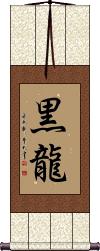
黒龍 is a generic title for “Black Dragon.”
The first character is black color.
The second means dragon.
Sometimes written as 黑龍 (just a minor variation in the first character).
Black Dragon
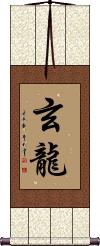
玄龍 is a sophisticated or scholarly way to say “Black Dragon.”
玄龍 is the title you'd expect in ancient Chinese literature.
The first character means black or mysterious.
The second character means dragon.
This black dragon represents a king dwelling in the depths of the mystic waters.
Black Dragon
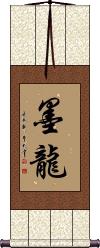
墨龍 is a cool way to say “Black Dragon.”
墨龍 is literally “Ink Dragon.” The ink part is black Chinese ink, the deepest, darkest ink available for thousands of years.
Black Dragon Ninjitsu

This is the Japanese martial arts title Black Dragon Ninjitsu or Black Dragon Ninjutsu in Kanji.
Blue Dragon
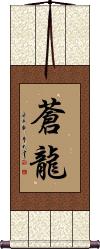
蒼龍 is one of a couple of possible titles for “blue dragon” (occasionally also translated as “green dragon”).
The first character means “deep blue” or “azure.”
The last character is dragon.
Bushido Dragon

This is the title Bushido Dragon in Chinese and Japanese Kanji.
In Japanese, this can also be written as 武士道竜.
Celestial Dragon
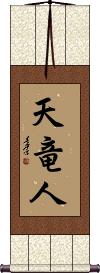
天竜人 is Celestial Dragon or Tenryūbito in Japanese.
This title is associated with the One Piece Manga/Anime series. This title is also translated in this context as “World Nobles” with the literal meaning “Heavenly Dragon Folk” or “Heaven Dragon Person/People.”
Can also be romanized as Tenryūbito, Tenryūhito, or Tenryūjin.
Water Dragon / Coiled Dragon
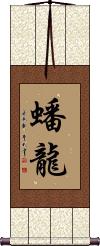
蟠龍 is sometimes seen as a lower-level of dragon or a dragon that has not-yet-reached its potential.
蟠龍 is often defined as a “lake dragon” that has not ascended to heaven.
Another way to put that is a dragon coiled on the earth, which has not yet ascended to the sky.
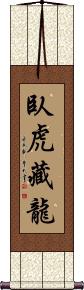
臥虎藏龍 is the movie title of the Kung Fu epic that was very popular in the west a few years back.
This is a re-ordering of an ancient Chinese proverb that refers to undiscovered talents.
The movie was one of the most popular Chinese foreign films to ever debut in the USA but received a lukewarm reception in China.
Note: This can be pronounced in Korean, but it's not a commonly used term.
Dragon Fist
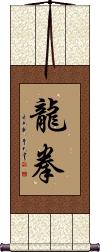
龍拳 is a title that literally means “Dragon Fist.”
The Spirit of the Dragon Horse
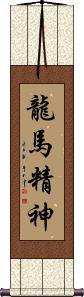
龍馬精神 is an old proverb that is used to wish someone good health and success combined as a great compliment.
The meaning is “The vigor and spirit of the legendary dragon-horse.” These four characters are often accompanied by four more which mean “...and the power and prestige of the tiger.” Here we are just offering the first part which is considered the short version.
By giving a wall scroll like this to someone, you were either wishing or telling them that they have an amazing quality. There is also a suggestion of good health - at least anyone with the vigor of a dragon horse would seem to also be in good health.
Note: In Japanese, this would be read as the spirit of 坂本龍馬 (Sakamoto_Ryōma), a beloved rebel who help abolish the old Japanese feudal system. This can be confusing, so I am declaring this proverb to be Chinese only.
The Spirit of the Dragon Horse and Power of a Tiger
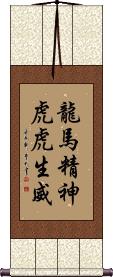
龍馬精神虎虎生威 is an old proverb that is used to wish someone great health and success combined as a great compliment.
The meaning is “The vigor and spirit of the legendary dragon-horse and the power and prestige of the tiger.”
By giving a wall scroll like this to someone, you were either wishing or telling them that they have these qualities. There is also a suggestion of good health - at least anyone with the vigor of a dragon horse would seem to also be in good health.
Dragon Lady
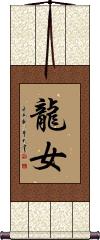
龍女 is literally “Dragon Lady” or “Dragon Woman.”
Dragon and Phoenix
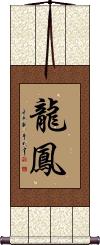
龍鳳 is the simplest way to express “Dragon and Phoenix” in Chinese and Japanese.
This title can be used to represent, “The emperor and empress,” or a metaphor for an outstanding personage.
It should be noted that this is most often used as a given name, “Ryuuhou” in Japanese. It may be read more as a name than by meaning in Japanese.
Dragon and Phoenix Brings Luck
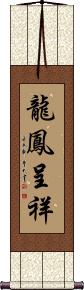
龍鳳呈祥 is often seen at weddings and other celebrations in China.
It suggests that the dragon and phoenix will bring you auspicious tidings.
The first character is a dragon.
The second is a phoenix.
The third is presents or brings.
And the last means auspicious, propitious, or luck.
Throughout China, the dragon and phoenix are symbols of good fortune. You will see these auspicious figures as decorative symbols on everything from buildings, furniture, wedding costumes, and sculptures in public parks to caskets and items used in ceremonies.
Dragon Spirit
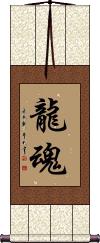
龍魂 means “Dragon Spirit” or “Dragon Ghost.”
Dragon Spirit
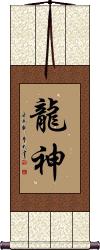
龍神 is a Chinese, Japanese Kanji, and old Korean Hanja title that can mean “dragon god,” “dragon king,” or “dragon spirit.”
In the context of Buddhism, this is one of eight kinds of spiritual beings found in Mahāyāna texts.
The Spirit of Dragon and Tiger
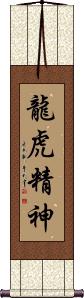
龍虎精神 means the spirit of the dragon and tiger.
It speaks to the vitality and vigor that is the nature of these two creatures.
Beyond “spirit,” the last two characters can also mean mind, soul, or heart. Therefore, you can also say this means “Heart of the Dragon and Tiger,” etc.
龍虎精神 is often titled “Ryukoseishin” in many Japanese martial arts.
Dragon Warrior
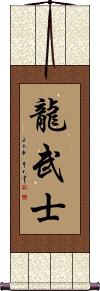
龍武士 is a generic title for “Dragon Warrior.”
Just as in English, it's a bit ambiguous. It can mean one who fights against dragons or the title of a warrior himself (imagine a warrior with a dragon symbol on his chest).
Dragon Warrior
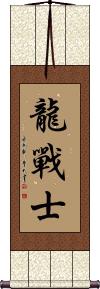
龍戰士 is another version of “Dragon Warrior.”
It's still a bit ambiguous. This one reads more like “Dragon Fighter” than “Dragon Warrior.” Perhaps you can also translate this one as “One who fights like a dragon.”
Dragon Warrior
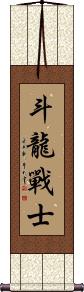
斗龍戰士 or “Dragon Warrior” is specifically one who fights against dragons.
This can also be read as “Dragon Fighter.”
Dragon Ball Kai
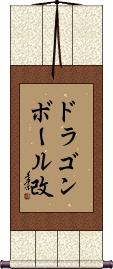
ドラゴンボール改 is the name for Doragon Bōru Kai (Dragon Ball Revised), a high-definition remastered and recut of the original Dragon Ball Z, released on the 20th anniversary.
Note: Because this selection contains some special Japanese Katakana characters, it should be written by a Japanese calligrapher.
Dragon Crane Tiger
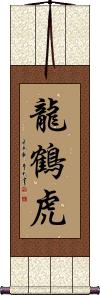
龍鶴虎 is Dragon Crane Tiger in Chinese.
Dragon Quest
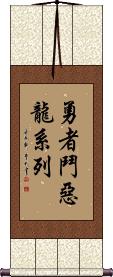
This is the title of the Nintendo Dragon Quest series/game in Chinese.
Earth Dragon
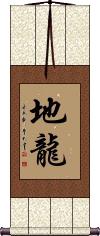
地龍 is the Earth Dragon, king of rivers and seas.
地龍 is sometimes used in Chinese as a nickname for earthworms.
Fire Dragon
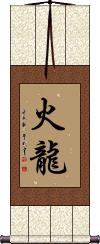
火龍 is how to write “Fire Dragon” in Chinese and Japanese Kanji.
This title is used more often in Chinese, a little lesser known in Japanese.
Flying Dragon
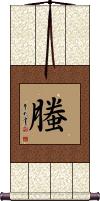
Flying Dragon Karate-Do
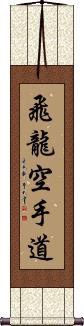
飛龍空手道 is the title Flying Dragon Karate-Do.
Golden Dragon
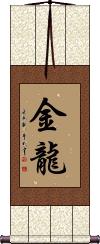
金龍 is the Chinese title for Golden Dragon.
The first character means gold, golden, or metal.
The second character is dragon.
This title has the same meaning in Japanese but is used mainly as a given name, Kinryu, or in reference to a certain kind of noodle soup in Japan.
Green Dragon / Blue Dragon
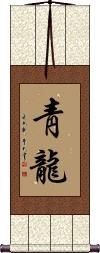
靑龍 is a title that can mean blue or green dragon.
The first character can mean blue, green, azure, or celadon.
The second character means dragon.
This is mostly a Chinese title (especially in Buddhism). It will be understood but less commonly used in Japanese and Korean.
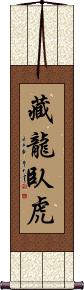
The meaning of 藏龍臥虎 is that both the tiger and dragon have amazing talents, but if they are out of view, you may not have discovered them.
This old Chinese idiom/proverb is appropriate for someone with an amazing ability that keeps that ability hidden.
You might think this title is in reverse, but actually, this is the original Chinese proverb.
The movie Crouching Tiger, Hidden Dragon, popularized this alternate version.
Flying Dragon Horse
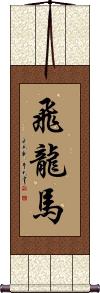
飛龍馬 is the title for a “flying dragon-horse.”
This can refer to a mythical beast or, more realistically, a very fast horse at the track.
Iron Dragon
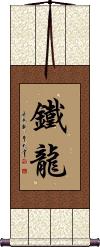
鐵龍 is the title Iron Dragon in Chinese.
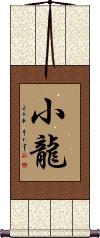
Little Dragon
Red Dragon
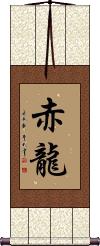
赤龍 is a generic title for “Red Dragon.”
The first character can mean red, crimson, or scarlet.
The second character is dragon.
Red Dragon / Vermillion Dragon
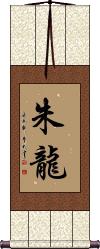
朱龍 is a sophisticated or scholarly way to say “Red Dragon.” 朱龍 is the title you'd expect in ancient Chinese literature.
The first character means red, cinnabar, or vermillion.
The second character means dragon.
It is said that the Vermillion Dragon represents kings that bestow blessings on lakes or bodies of water. This makes more sense in an ancient Chinese context.
Spirit Of The Dragon Martial Arts
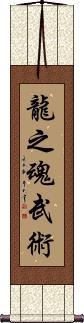
龍之魂武術 is the title Spirit Of The Dragon Martial Arts in Chinese.
This can also be translated as “Dragon Soul Martial Arts.”
Celestial Dragon / Tian Long
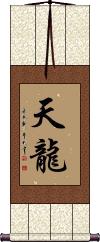
天龍 can mean Heavenly Dragon (Dragon of Heaven), Sky Dragon, Holy Dragon, Celestial Dragon, or Divine Dragon.
This can be a given name in both China and Japan (天龍 is pronounced Tenryū and sometimes written 天竜 in Japanese).
In an older Buddhist context, this can refer to Brahma, Indra, and the devas, together with the nāgas. It can also refer to celestials and snake spirits.
Water Dragon / Rain Dragon
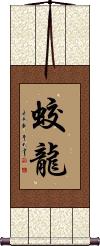
蛟龍 is the title for the water dragon is the hornless or scaled dragon. 蛟龍 is the king of all aquatic animals with the ability to control rain and floods.
In Japanese, the rain dragon can represent hidden genius. This dragon's domain is the deep murky water, thus with hidden potential. This can also be the Japanese given name Kouryuu.
The Way of the Dragon
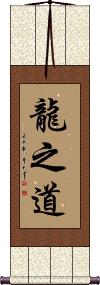
龍之道 is how the way of the dragon is written in Chinese.
龍之道 is not the same as the Chinese movie that was titled in English as “The Way of the Dragon.” 龍之道 is, rather, the literal meaning of the dragon's way. The first character is dragon, the second is a possessive article, and the third character means way or path.
The Way of the Dragon
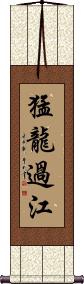
猛龍過江 is the title of the 1972 movie, “The Way of the Dragon.”
This means “Fierce dragons crossing the river.”
If you want a title that means “way of the dragon,” please see the more accurate 龍之道 3-character title.
White Dragon
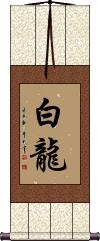
白龍 is a sophisticated or scholarly way to say “White Dragon.” 白龍 is the title you'd expect in ancient Chinese literature.
The first character means white, pure, or bright.
The second character means dragon.
The White Dragon represents a king who is virtuous and pure.
Yellow Dragon
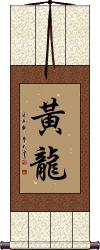
黃龍 is a sophisticated or scholarly way to say “Yellow Dragon.” 黃龍 is the title you'd expect in ancient Chinese literature.
The first character means yellow.
The second character means dragon.
The Yellow Dragon represents a king that favorably hears all petitions of his subjects.
Note: This title can be the name of Huanglong county in Yan’an, located in Shaanxi province of China.
The Five Animals
Dragon Snake Tiger Leopard Crane
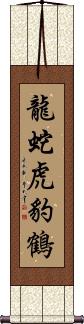
龍蛇虎豹鶴 is a list of the Chinese characters for the five animals of Shaolin Kung Fu in a comfortable order (meaning that they are in the proper order and will “feel right” to a Chinese person who views this arrangement).
Fatal error: Cannot redeclare function foreignPrice() (previously declared in /home/gwest/web/chinesescrollpainting.com/public_html/includes/currencyconverter.php:22) in /home/gwest/web/orientaloutpost.com/public_html/includes/currencyconverter.php on line 22